

If you’ve been waiting for a more affordable way into the Simagic lineup, the new Simagic P700 pedals are officially here. Announced today, March 19, 2026, the P700 lands as a new entry-level option. It still brings in features usually found on more serious pedal sets.
On paper, there’s a lot to like. The P700 uses a 150kg load cell and a dual sensor system that combines a Hall-effect sensor with load cell braking. It also includes 35 brake settings, full adjustability, optional haptic support, and flexible mounting. Everything runs through SimPro Manager V3.0.0. That’s a strong feature list. Simagic built the P700 for drivers who are just starting out but don’t want to outgrow their hardware too quickly. The Simagic P700 pedals give drivers a more flexible entry point without sacrificing adjustability.
Simagic’s pitch is clear. This pedal set grows with you, from beginner setups to more serious rigs over time.
What Makes the Simagic P700 Pedals Stand Out
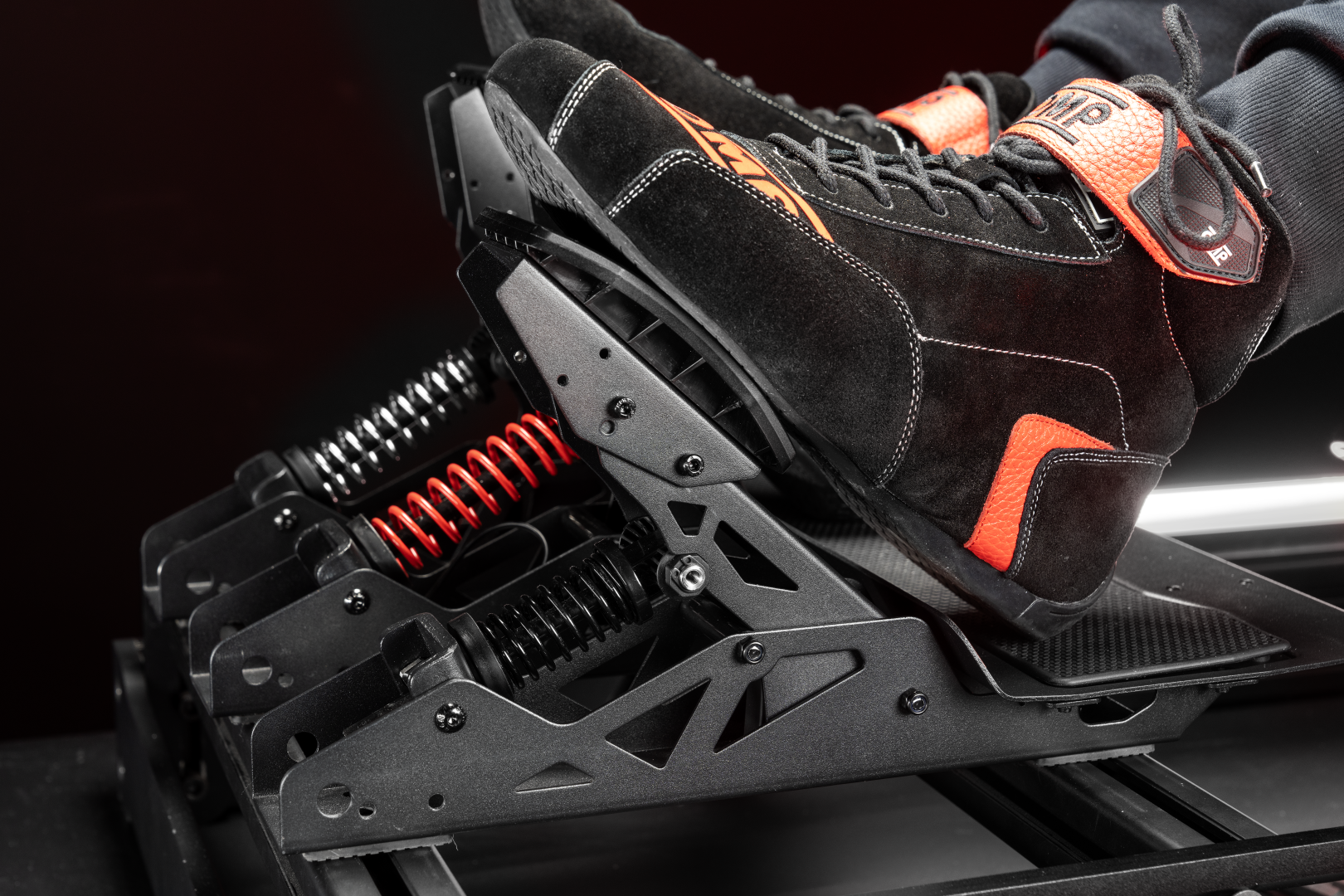
The biggest talking point here is the brake system. Simagic says the P700 uses Full-Range Adaptive Sensing Technology. It’s designed to make brake input more stable and predictable across the full force range. In simple terms, it’s meant to fix two common issues. Light braking can feel vague, and heavy braking can feel compressed on more basic pedal sets.
That’s paired with the dual-sensor setup, which gives users two different approaches depending on how they run their rig. The load cell measures force, which creates a more realistic braking feel. The Hall sensor tracks pedal travel instead. That can make more sense in softer, floor-mounted setups where a passenger-car-style brake feel is preferred.
Simagic is also putting a lot of emphasis on adaptability. The P700 includes 35 brake setting combinations. Different springs and elastomers let drivers tune the brake feel to match their setup. That matters because not everyone is running the same kind of rig. Some people are on carpet. Some are using a wheel stand. Others are already on a full profile cockpit.
That flexibility is one of the P700’s biggest strengths right away.
Built for Different Rig Setups
One of the more interesting things about the P700 is that it doesn’t seem locked into one type of user. Simagic includes carpet grips for home setups and offers an optional wall mount for added support. It also supports profile frame mounting for more advanced rigs. The pedals feature adjustable angle, height, spacing, and fitment, giving drivers more freedom to dial things in.
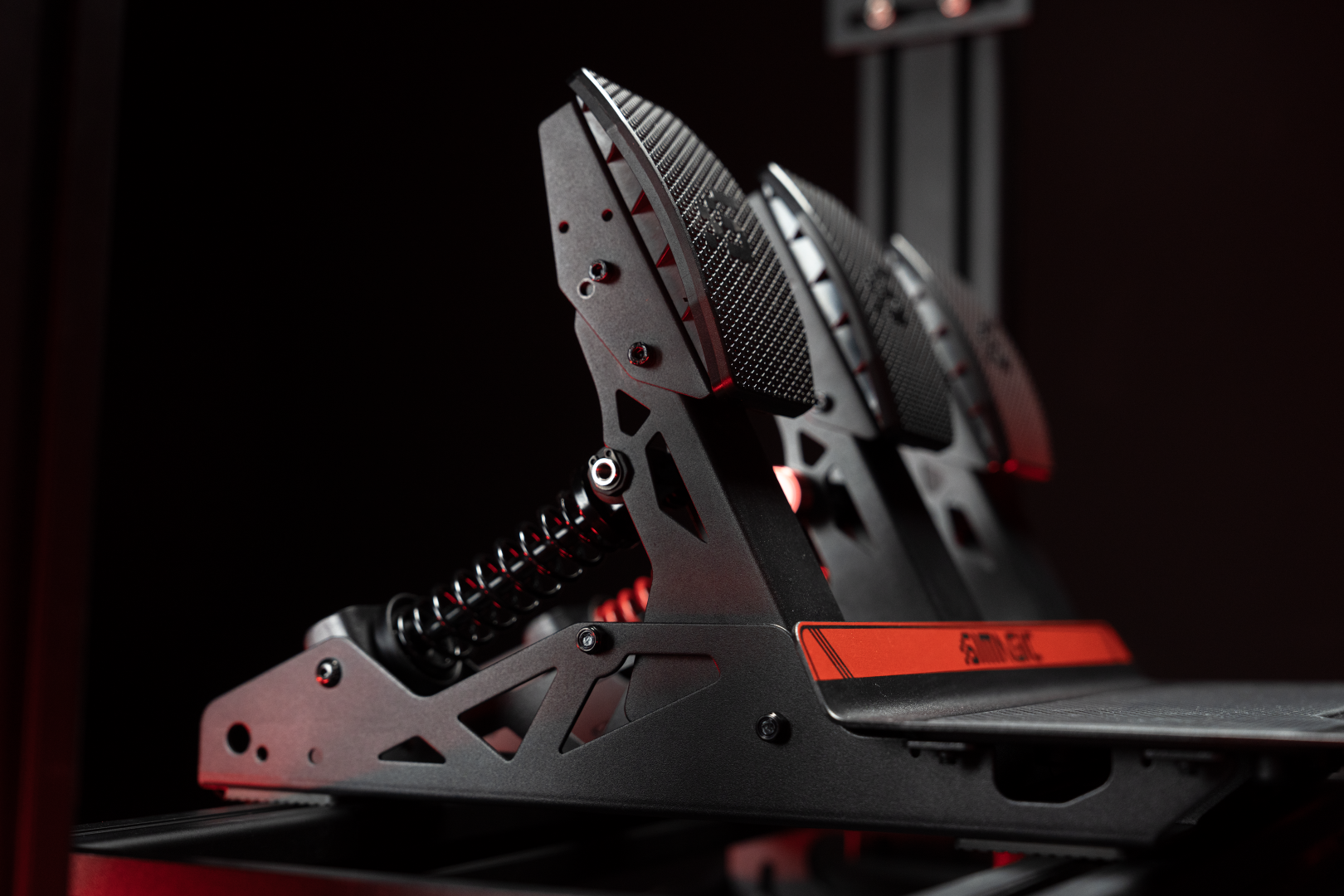
That same idea shows up in the design details too. The P700 uses an all-metal steel construction. It also includes a silicone heel plate for added grip and comfort, especially for drivers in socks or barefoot.
It’s clearly trying to sit in a spot that’s more versatile than a typical budget pedal set.
Early Impressions and Review Takeaways
Early review coverage paints a pretty balanced picture.
In a first-look review, OC Racing called the P700 a strong value at its price point, especially for beginner to lower mid-range sim racers. He pointed to the pedal set’s versatility, smooth brake feel, adjustment options, and overall on-track control as real positives. He also felt the brake offered a more refined feeling than some direct competitors in this range, including the Moza SRP and Fanatec CSL load cell pedals. At the same time, he noted some limitations, especially for drivers who want a stiffer or more premium brake feel. He also called out issues like the heel plate attracting dust and lifting during use, along with brake squeaking during testing.
A separate review from Random Callsign landed in a similar place. The overall takeaway is that the P700 offers real value thanks to its range of setup options. It works across different stages of a sim racing setup. He was especially positive about the brake and tuning options. Once dialed in, performance was strong for the price. That said, he ran into some frustrations during assembly. He also pointed out smaller quality control annoyances and mixed feelings about the optional haptics.
That lines up with what the broader community seems to be feeling in early discussion too. There’s clear interest here, especially around the price, flexibility, and how the P700 compares to other entry-level and budget-minded load cell options. At the same time, some sim racers are already questioning where it sits against alternatives like the P500, SimNet, Simsonn, SimJack, and other price-to-performance favorites.
So far, the reaction seems grounded. The P700 looks compelling, but people are watching how it performs long term and where it lands in the market.
P700 vs P500 and the rest of the Simagic lineup
Based on Simagic’s current pedal family, the P700 looks like it’s meant to create a clearer step between entry-level buyers and drivers aiming for more premium options later. It brings in more adjustability, more tuning paths, and more upgrade flexibility than a basic starter pedal set, but it doesn’t appear to be trying to replace higher-end options like the P1000 for drivers chasing a more serious top-end pedal feel.
That’s probably the right way to look at it.
The P700 makes the most sense for someone who wants a forgiving starting point. It works across different mounting setups and still leaves room to grow as the rest of the rig improves.
Final thoughts
The Simagic P700 pedals look like a smart addition to the current pedal market. There’s enough adjustability here to make them more than just a beginner throwaway purchase, and enough practicality to make them relevant for a wide range of setups. The brake system, especially, looks like the real story.
They’re also not arriving without some questions. The early reviews are promising, but they’re not pretending the P700 is perfect. Assembly annoyances, heel plate complaints, squeaking concerns, and mixed opinions on the optional haptics are all part of the conversation already.
For sim racers in the entry-level to lower mid-range space, the P700 is worth a look. For the right buyer, the Simagic P700 pedals offer strong value in this segment.
The Simagic P700 pedals are now in stock at Sim Motion, so if you’ve been looking for a new load cell set that offers more flexibility than the usual starter options, this is one to keep on your radar.