
For years, if you asked us where to start with direct drive on a budget, the answer was easy: the MOZA R3. Solid torque, fair price, no complaints. So when a new bundle lands right above it, priced higher and aimed at basically the same buyer, you have to ask what you’re getting for the extra money. Enter the MOZA R5 Pro bundle.
Dave Adams got his hands on a pre-production unit and put it through its paces. Here’s what you need to know before you decide where your money goes.
Disclosure: MOZA provided the featured product(s) in this video for review. We also sell MOZA products through Sim Motion. All opinions are our own.
What’s in the MOZA R5 Pro Bundle
The MOZA R5 Pro bundle isn’t just a wheelbase. It’s a full starter kit:
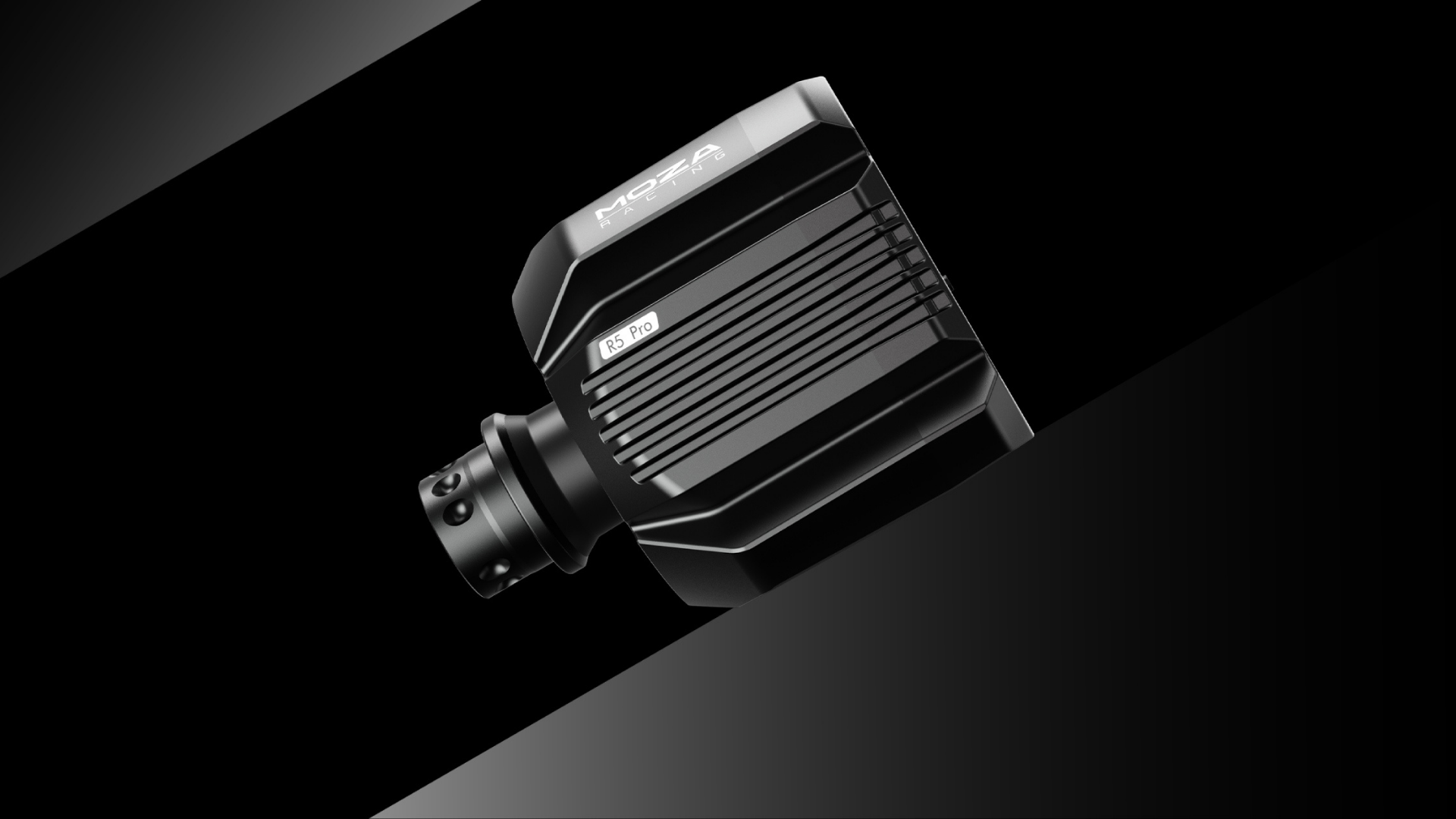
- R5 Pro wheelbase: 6Nm of torque, 21-bit encoder, aircraft-grade aluminum housing
- ES Lite wheel: 280mm D-shaped rim, 22 programmable inputs, 10 top-mounted LEDs
- SRP Lite 2 pedals: clutch, brake, and throttle, steel faces and bases, contactless Hall effect sensors
- Desk clamp: included, so you can start racing without a rig or wheel stand
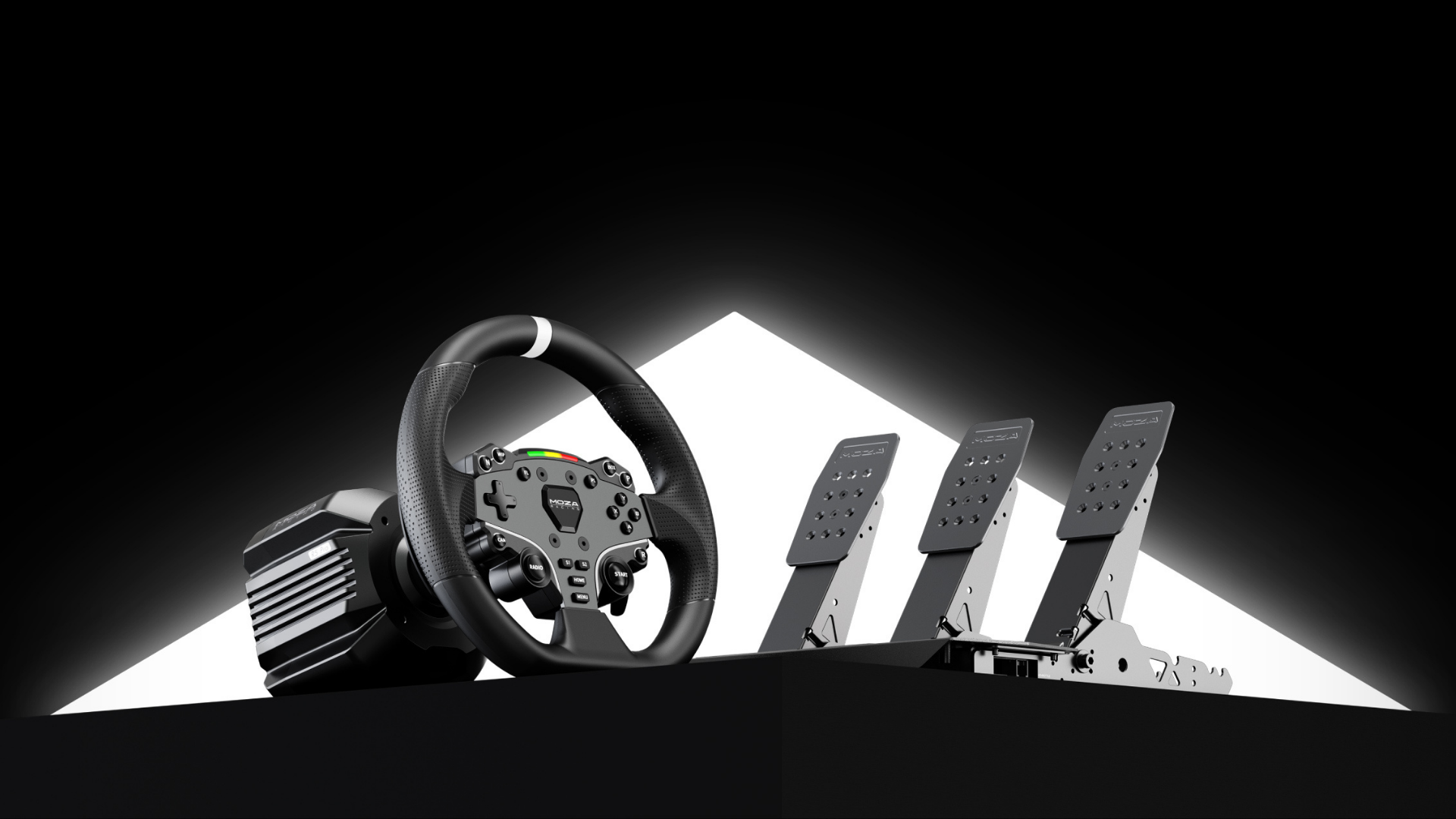
Mounting is flexible too. Bottom mount it, front mount it, or clamp it straight to a desk. The base grows with your setup instead of locking you into one configuration from day one.
The upgrade that actually matters
The headline spec bump is 6Nm of torque, up from 5.5Nm on the outgoing R5. On paper, that’s a modest jump. In practice, that extra half-newton-meter of headroom is less about raw strength and more about reducing clipping. It also improves fidelity when the wheel is working hard.
Pair that with the jump from a 15-bit to a 21-bit encoder, plus MOZA’s NexGen 5.0 force feedback algorithm, and you get a wheelbase that reads finer detail than the numbers alone suggest. You won’t necessarily go faster with it. You’ll be more consistent lap after lap, and that matters more over a season than one hot lap ever will.
The ES Lite wheel earns its keep too. It’s light, and lightweight sometimes gets mistaken for cheap, but the build holds up under real force. Combined with the 280mm diameter, it’s tuned to communicate more information into your hands rather than dull it down. It’s not a flagship rim, and it won’t be the last wheel you buy, but it’s far from a placeholder.
Pit House, MOZA’s companion software, is where all of this gets dialed in: LED behavior, pedal calibration, force feedback intensity, per-device settings. If you want to tune every input to your exact preference across MOZA’s ecosystem of connected gear, it’s all sitting right there.
Where it falls short
- Back panel plastics feel thin. The aluminum housing feels like proper sim racing kit, but the rear plastics are a step down. It’s the one spot where cost-cutting shows.
- The ES Lite is a starter wheel, not a destination. It’s genuinely good for the price point, but expect it to become your second wheel once you’re ready to upgrade rims.
- PC only, for now. Console racers on Xbox or PlayStation are out of luck at launch. MOZA’s newly announced Gran Turismo partnership hints at PlayStation support down the road, but nothing is confirmed for this bundle yet.
- Not a meaningful upgrade if you already own an R5. The torque and encoder gains are real on paper but hard to feel wheel-to-wheel in practice. Don’t rebuy just for this.
- It costs more. At $399, it’s a step up from both the outgoing R5 and the R3 bundle. That price difference is the actual decision point for a lot of buyers.
Who should buy the MOZA R5 Pro Bundle
- Belt or gear-driven wheel owners (Logitech G25/G27/G920, Thrustmaster T300/T248) making their first jump to direct drive. This is the clearest, most dramatic upgrade path in the bundle.
- R3 owners ready for the next step, especially if you’ve had your R3 a while or plan to hand it down. The difference is noticeable enough to justify the move. If you’re chasing serious competitive performance, though, it may be worth saving further for something like an R12 instead of stepping up incrementally.
- First-time buyers who are more serious than the typical R3 shopper. If you want real headroom from the start instead of upgrading twice, this is the more direct route in.
Who should sit this one out: current R5 owners, since the gain is too small to justify the cost, and console racers waiting on confirmed PlayStation support.
Final verdict on the MOZA R5 Pro Bundle
The MOZA R5 Pro bundle delivers exactly what it promises: a genuine step up in torque, precision, and feel over the R3. It wraps that in a package that removes the guesswork of buying a wheel and pedals separately. It’s not the cheapest way into sim racing, and it’s not trying to be.
At $399, the R5 Pro bundle isn’t chasing the lowest price point. It’s chasing the best return on the money you’re willing to spend. For the buyer stepping up from belts, gears, or a well-worn R3, that’s a trade worth making.