

A Historic Return, a Technical Test, and a Rare Opening for Single-Player Sim Racing
Geoff Crammond Racing is officially coming to Steam in 2026, marking the unexpected return of one of sim racing’s most influential series after more than two decades.
Out of nowhere, Geoff Crammond’s Grand Prix series is officially coming back to Steam in 2026. This time, it’s all four titles, without official Formula One branding. A new name. The same legacy.
The announcement, first surfaced and broken down by OverTake_gg, feels borderline unreal. Grand Prix 1 through 4 haven’t seen an official modern rerelease since their original runs between 1991 and 2002. For more than twenty years, these games have survived through fan patches, workarounds, and sheer stubborn love.
Now, however, they’re returning under the banner Geoff Crammond Racing, published by MicroProse.
That alone makes this one of the most unusual moments in sim racing history. But whether it becomes a celebration or a cautionary tale depends on how seriously MicroProse treats what these games actually are.
Why Geoff Crammond Racing Still Matters in 2026
It’s easy to write off the Grand Prix series as nostalgia bait if you never spent nights wrestling GP2 or GP4 into running on modern hardware. But that misses the point.
Geoff Crammond’s games didn’t just look different. They thought differently.
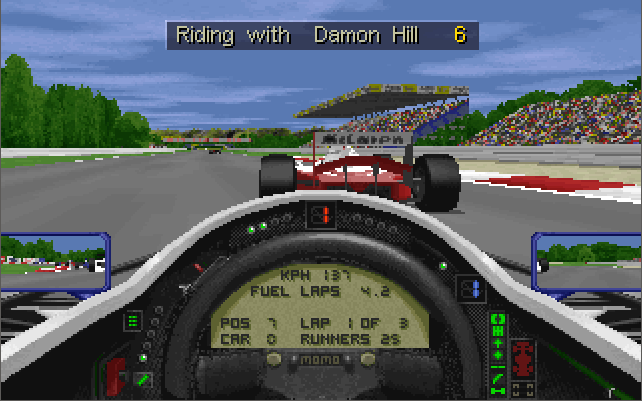
The original Formula One Grand Prix released in 1991 and introduced concepts that are now foundational, including the ideal racing line and real-time telemetry-driven physics. AI that reacted instead of simply following rails. On early 386 and 486 PCs, it ran at around 25 frames per second, which was absurd for the complexity involved at the time.
That philosophy carried through to Grand Prix 4 in 2002. Even today, GP4’s AI is regularly praised for its defensive behavior, situational awareness, and racecraft. These cars fight you. They don’t just rubber-band or politely move aside. It’s one of the reasons creators like GP Laps and Ted Meat have been running these games for years.
Single-player immersion was the point. And that’s exactly what the modern sim racing market has slowly deprioritized. We’ve seen this shift play out across the genre, especially in how modern sims handle AI racecraft and offline progression.
The x86 Project Sets the Bar for Geoff Crammond Racing
Here’s the part that makes this rerelease genuinely risky for MicroProse.
In fact, the community already solved many of these problems.
The x86 project, led by Hatcher, is a native Windows port of Grand Prix 2, originally a DOS title. It bypasses DOSBox entirely. No emulation layer. No input lag. Full modern hardware compatibility.
That means widescreen support, high refresh rates, proper controller and wheel behavior, and stable performance on Windows 10 and Windows 11. Fans already achieved H-pattern shifting support and modern quality-of-life improvements without touching the soul of the game.
For ISR readers, as a result, this is the line in the sand.
If MicroProse’s 2026 Steam release is just a wrapped DOSBox executable with a launcher and some AI-upscaled textures, it won’t hold up. Not when a free fan project already delivers a better technical experience.
A commercial rerelease has to match or exceed that standard. Anything less will be called out immediately.
Geoff Crammond Racing and the Physics-Over-Flash Philosophy
Part of what makes this comeback interesting is how sharply it contrasts with modern design trends.
Crammond wrote his own 3D engine long before DirectX and OpenGL were standard. The series leaned on a software renderer and prioritized simulation depth over visual spectacle. There were no canned effects or exaggerated tire noise tricks. Instead, what you felt came directly from the physics model itself.
Even now, that purity still resonates.
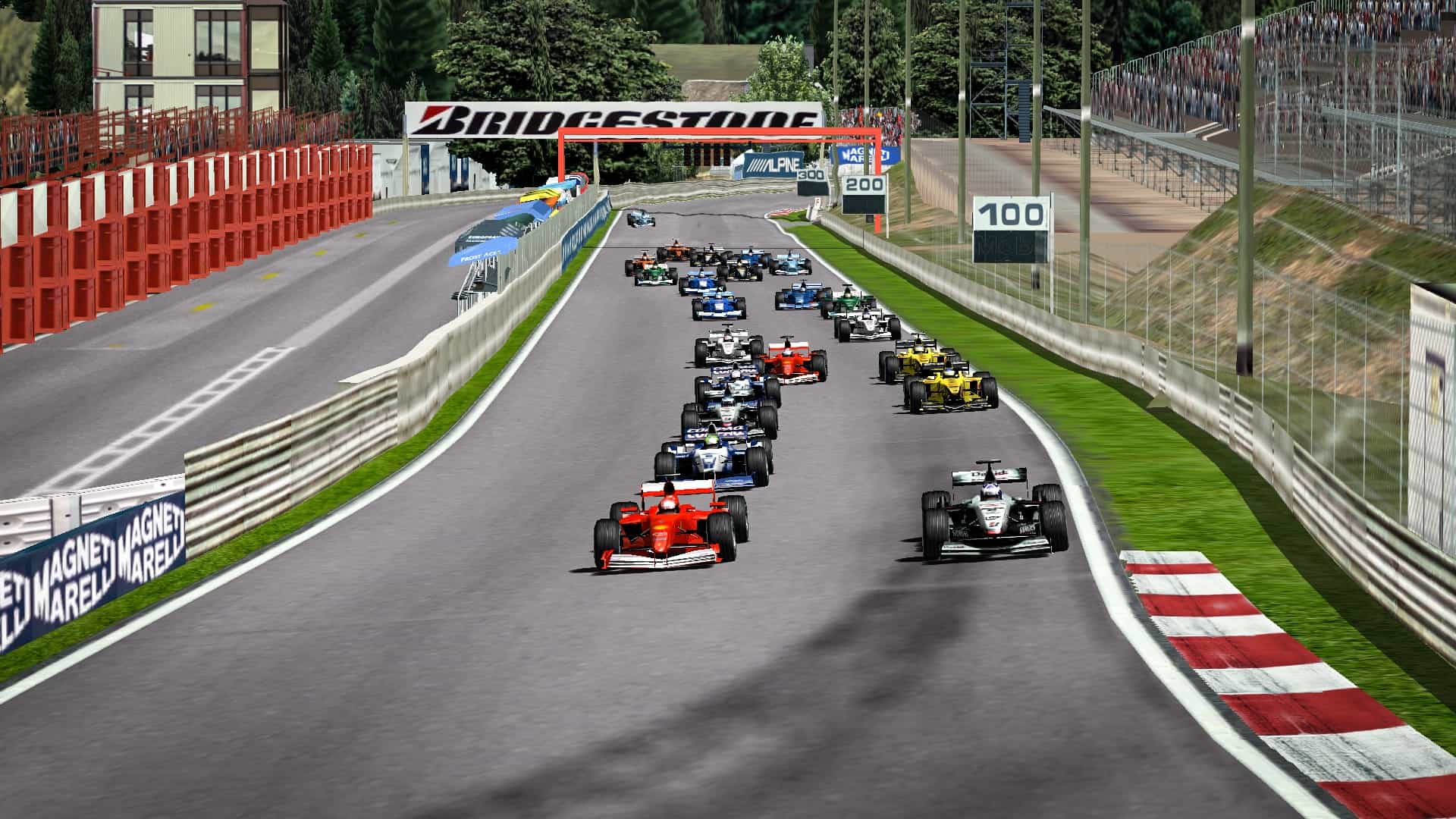
Even in 2026, however, when modern F1 games struggle with believable AI defense and offline race immersion, GP4 remains a reference point. Not because it looks good. Because it races well.
That’s the legacy MicroProse is inheriting. And it’s not an easy one to fake.
Losing the F1 License Might Be the Best Thing That Happened
The absence of official Formula One branding looks strange at first. Grand Prix 1 through 4 are becoming Geoff Crammond Racing 1–4, complete with fictional teams, cars, and driver names.
Still, structurally, this is a win.
Without Formula One Management’s licensing restrictions, modding becomes far simpler. Without real-world branding clauses, there’s no takedown risk for historical liveries and no artificial limits on community creativity.
If Steam Workshop support is implemented properly, the community can legally restore period-correct cars, drivers, tracks, and seasons almost immediately. Think “John Newhouse”-style naming conventions on day one, followed quickly by full historical conversions.
This is preservation, not piracy. And it’s only possible because the license is gone.
The Steam Page Raises Real Questions
There are red flags worth addressing honestly.
The current Steam store pages show surprisingly high system requirements for games that are more than twenty years old, raising familiar concerns about technical shortcuts and mismatched expectations. Community discussions on r/simracing have already pointed this out. Altogether, that suggests heavy wrappers, AI-upscaled assets, or extra layers running on top of the original code.
The imagery and descriptions on those pages also appear heavily AI-generated. Some screenshots show sloppy censorship artifacts. Some descriptions reference features that were never part of the original series, like online multiplayer or formal career modes.
As a result, that disconnect fuels concern. Is this a carefully handled preservation effort, or a reactive cash-in responding to renewed interest around the Grand Prix name?
Right now, the answer isn’t clear.
Why the Timing Is Perfect for Geoff Crammond Racing
More importantly, here’s the part that makes this moment bigger than nostalgia.
There won’t be a standalone EA Codemasters F1 release in 2026. The series is reportedly skipping a year to focus on a reworked engine for 2027. That leaves a rare gap in the market.
Open-wheel fans won’t have a new official alternative. And most modern sims are laser-focused on multiplayer ecosystems rather than deep offline experiences.
Grand Prix has always been the single-player king.
If MicroProse gets this right, even modestly right, Geoff Crammond Racing could become more than a historical footnote. It could reintroduce an entire generation to a style of racing that’s quietly disappeared.
A Once-in-a-Generation Opportunity for Geoff Crammond Racing
No one is asking for a reinvention. Fans aren’t demanding Grand Prix 5. They’re asking for respect.
Modern resolution support. Stable performance. Input fidelity. Wheel rotation adjustment. The kind of quality-of-life improvements the x86 project already proved were possible.
These games don’t need to be modernized into something else. They need to be preserved properly and then allowed to evolve through the community.
MicroProse is opening a door that almost never opens in sports gaming. Classic titles returning without licenses. Legally moddable. Officially accessible.
Ultimately, whether this becomes legendary or embarrassingly lazy depends entirely on execution.
Still, the opportunity is real. And for single-player sim racing fans, it hasn’t felt this promising in a very long time.