
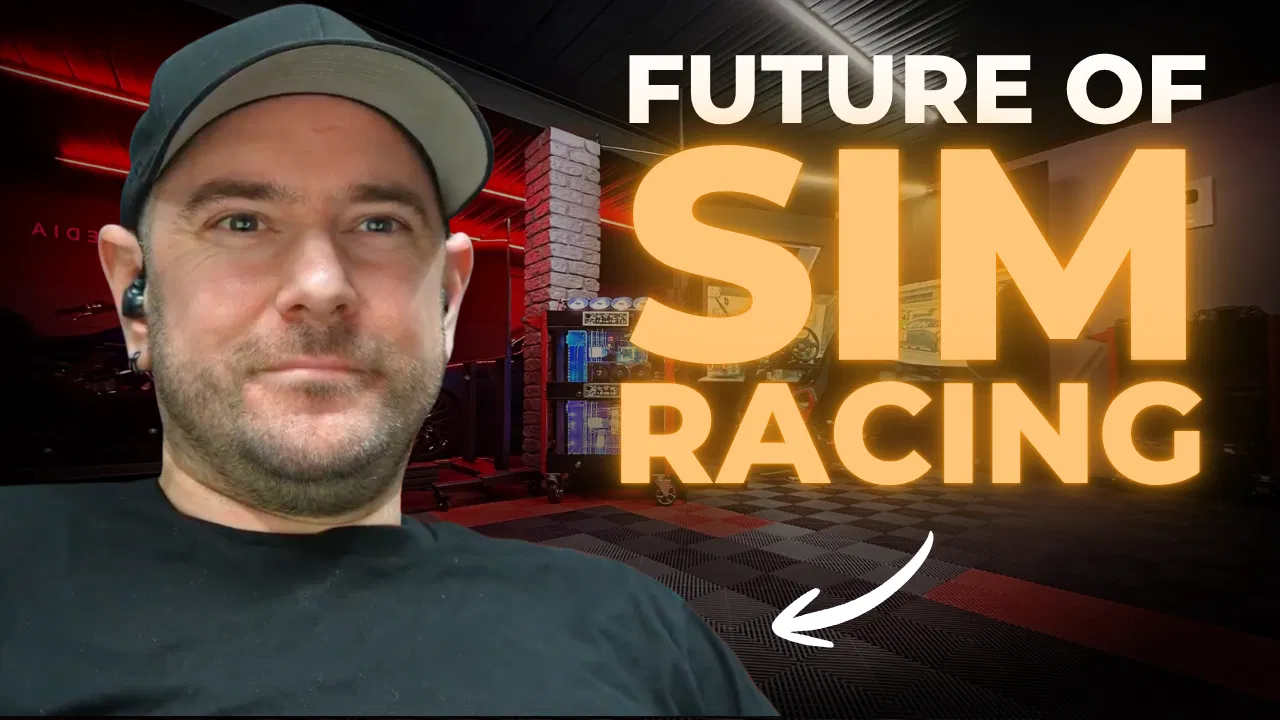
What happens when the hobby that saved you from your own anxiety turns into a business you can’t keep up with? That question sits underneath our new Will Ford Boosted Media interview, one of the most candid conversations we’ve had on the podcast in a long time.
You’ve probably watched one of Will’s reviews before buying a wheelbase or a set of pedals. You probably don’t know how he got there. You definitely don’t know what it’s costing him to stay there.
From a Subaru BRZ to 39 Wheelbases
Will didn’t set out to build a review empire. His channel started in 2014 as Project BRZ. It was a niche build log for the car he bought after he and his wife were told they likely couldn’t have kids. They went on to have two. When he sold the car in 2016, he offered the channel to the buyer. He figured nobody would stick around once the BRZ was gone. The buyer passed. So Will pivoted toward whatever he found interesting: PC builds, then a Fanatec wheelbase unboxing in October 2018 that quietly launched his sim racing career.
The timing mattered. Will started reviewing gear the same week John from Sim Racing Garage announced he was stepping away for an engineering job. An engineering background, a stint building Sony training materials, and years of pushing through self-doubt all lined up at once.
Inside the Boosted Media Business Model
You’d assume a channel with this reach lives and dies by YouTube. Will told us the opposite is true now. Roughly 70% of Boosted Media’s revenue comes through the website, not the videos. That’s a deliberate hedge. YouTube has emailed him before, threatening to pull the channel with zero warning. He doesn’t want the business hostage to a platform that can change the rules overnight.
That shift shows up in three ways:
- Written reviews now accompany every video review
- Comparison charts get revisited every one to two months as firmware updates change how gear actually drives
- Videos have moved from “journey of discovery” testing to a week of private testing followed by a tighter summary
Early reviews walked you through his learning process in real time. These days, with 39 direct-drive wheelbases reviewed, that format doesn’t scale. Firmware turns every product into a moving target. The website absorbs the depth so the video doesn’t have to. If you want to see that same depth-first approach applied to a full buying decision, our beginner sim racing setup guide works the same way.
What the Will Ford Boosted Media Interview Reveals About Force Feedback
Ask Will what separates a $1,500-more-expensive wheelbase from a mid-range one, wheel held constant, and he won’t point to torque numbers first. Motor design matters. Shaft inertia matters. So does how much the control software compromises to smooth out the feel. His team recalibrated their own comparison charts after testing the Simucube 3 Pro and Sport. They dropped their old 9.5-out-of-10 benchmark down to 8.5, just to create room at the top. For a broader look at how different bases stack up at every price point, check our 2026 sim racing wheel rankings.
The Sim Magic Evo Ultra came up too. It’s a case study in the opposite problem: a wheelbase so responsive it verged on hyperactive until his team dialed it back.
On motion, Will’s take is blunt: less is more. The mistake he sees constantly is rigs trying to simulate the car’s body movement instead of what your body would actually feel in the seat. Oversell the sway and roll, and you get an unnatural floating sensation every time the system returns to center. He’s not anti-motion. He’s anti-overdoing it. His best compliment to his own setup is that he sometimes forgets it’s turned on mid-race.
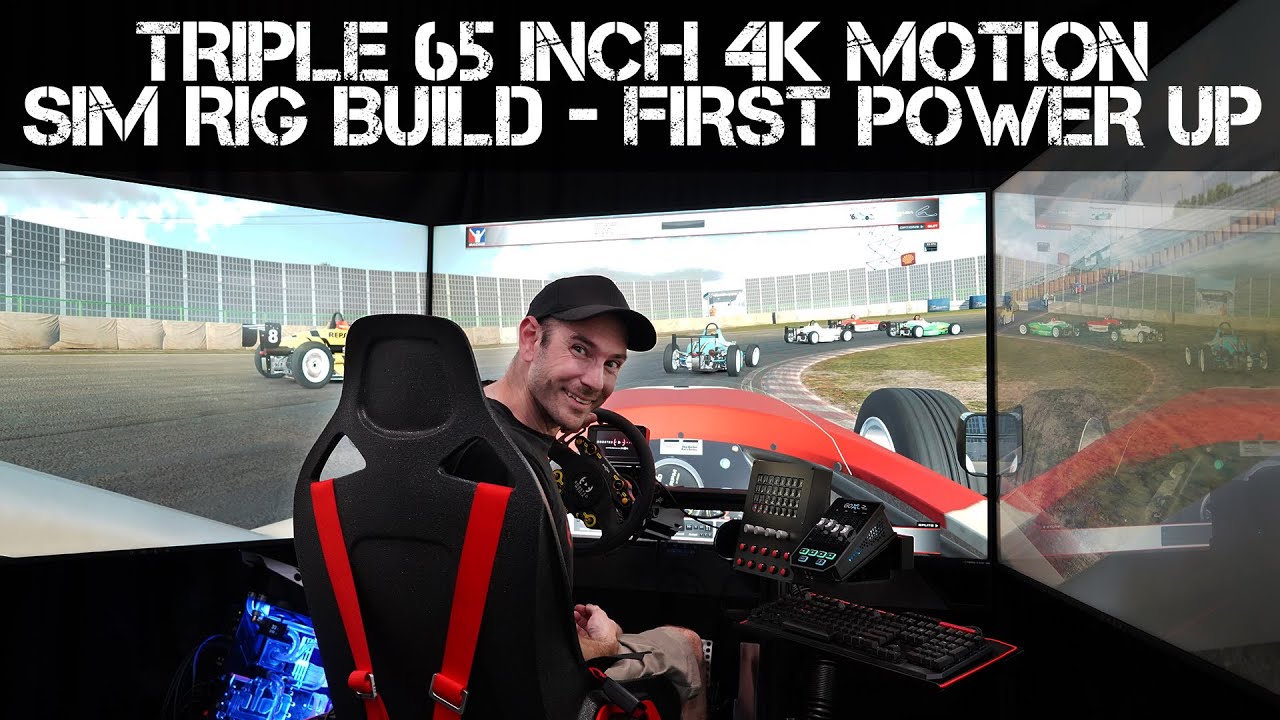
We ran into a similar debate testing motion ourselves, our Simrig SR3 review covers what that actually feels like in practice.
The Part Most Reviews Don’t Cover
The most candid stretch of the conversation wasn’t about gear at all. Will talked openly about health problems tied to years of neglecting sleep and exercise. He described a nocturnal work schedule created by the time zone gap between Australia and most of his industry contacts. He called his burnout largely self-inflicted, the product of expectations he holds for himself that outpace what anyone else actually demands of him.
He’s also been public about an anxiety condition and being on the autism spectrum. Both feed the hyperfocus that makes him good at detailed testing. Both make it hard for him to walk away from a project once he’s committed.
His response wasn’t to slow the review side down. Instead, he’s building something separate: a new, family-friendly automotive channel called Boosted Builds, filmed in a workshop he’s spent 18 months building. His kids are old enough now to be part of the content instead of competing with it for his time.
Final Thoughts on the Will Ford Boosted Media Interview
This Will Ford Boosted Media interview struck a nerve in the comments, and it’s not the hardware talk that did it. It’s watching someone who’s spent over a decade building one of sim racing’s most trusted names admit the pace hasn’t been sustainable. If you came for gear opinions, you got plenty: Simucube’s edge over mid-range bases, the case against overdone motion rigs, and why Will’s team stopped chasing every firmware update on camera.
But the bigger takeaway is the one Will landed on himself. The audience deserves more than they take. That standard has guided Boosted Media since 2014. It’s the same standard now pushing him to protect his health, his family time, and whatever’s left of the hobby that started this whole thing.