
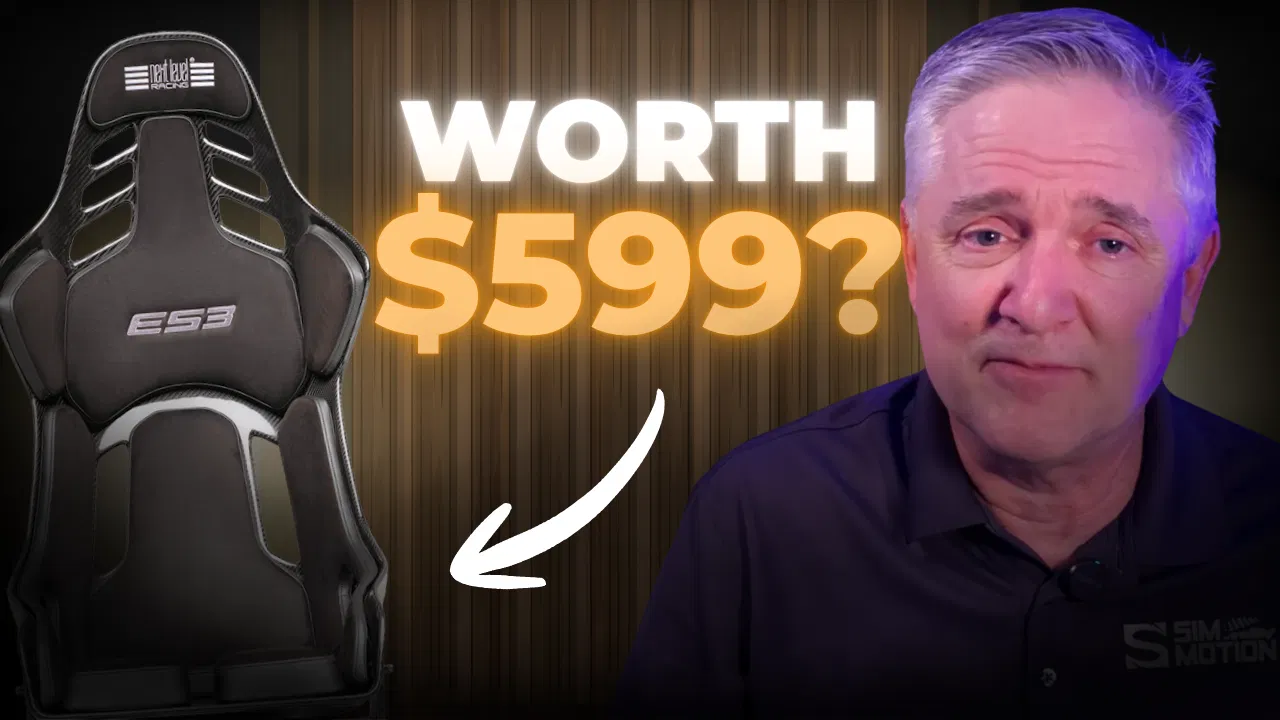
Disclosure: Next Level Racing provided the ES3 Elite seat featured in this review at no cost. All opinions below are our own.
What does it actually take to make you swap out a seat you’ve been happy with for years?
For Darin, it took one email from Next Level Racing and about ten minutes in the ES3 Elite. That short test drive is the whole reason this Next Level Racing ES3 review exists. The seat wasn’t just a review unit passing through his rig. By the end of testing, he’d made a call most reviewers won’t. It’s not leaving his rig.
Next Level Racing ES3 Review: What You Get
The ES3 is Next Level Racing’s fixed-back, hypercar-inspired seat. It comes in two flavors:
- Fiberglass Edition: $599 USD, high-strength fiberglass shell
- Carbon Fiber Edition: $1,399 USD, full carbon fiber shell for a lighter build
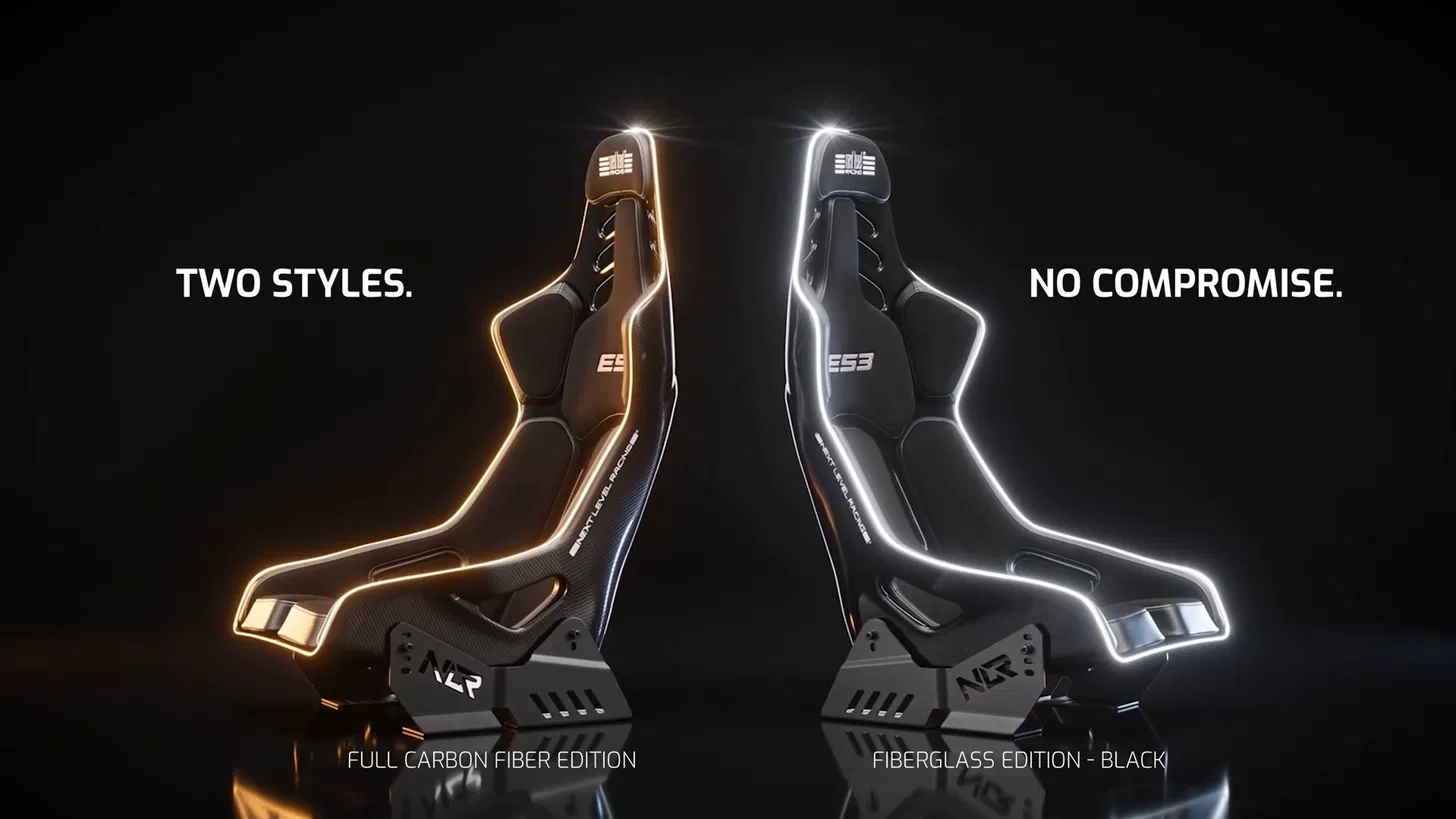
Both share the same seat profile, support structure, and cockpit compatibility. The price jump buys you weight savings and shell material, not a different seat underneath. Here’s what you’re working with on either version:
- No-flex performance design, built for heavy load-cell pedals and motion platforms
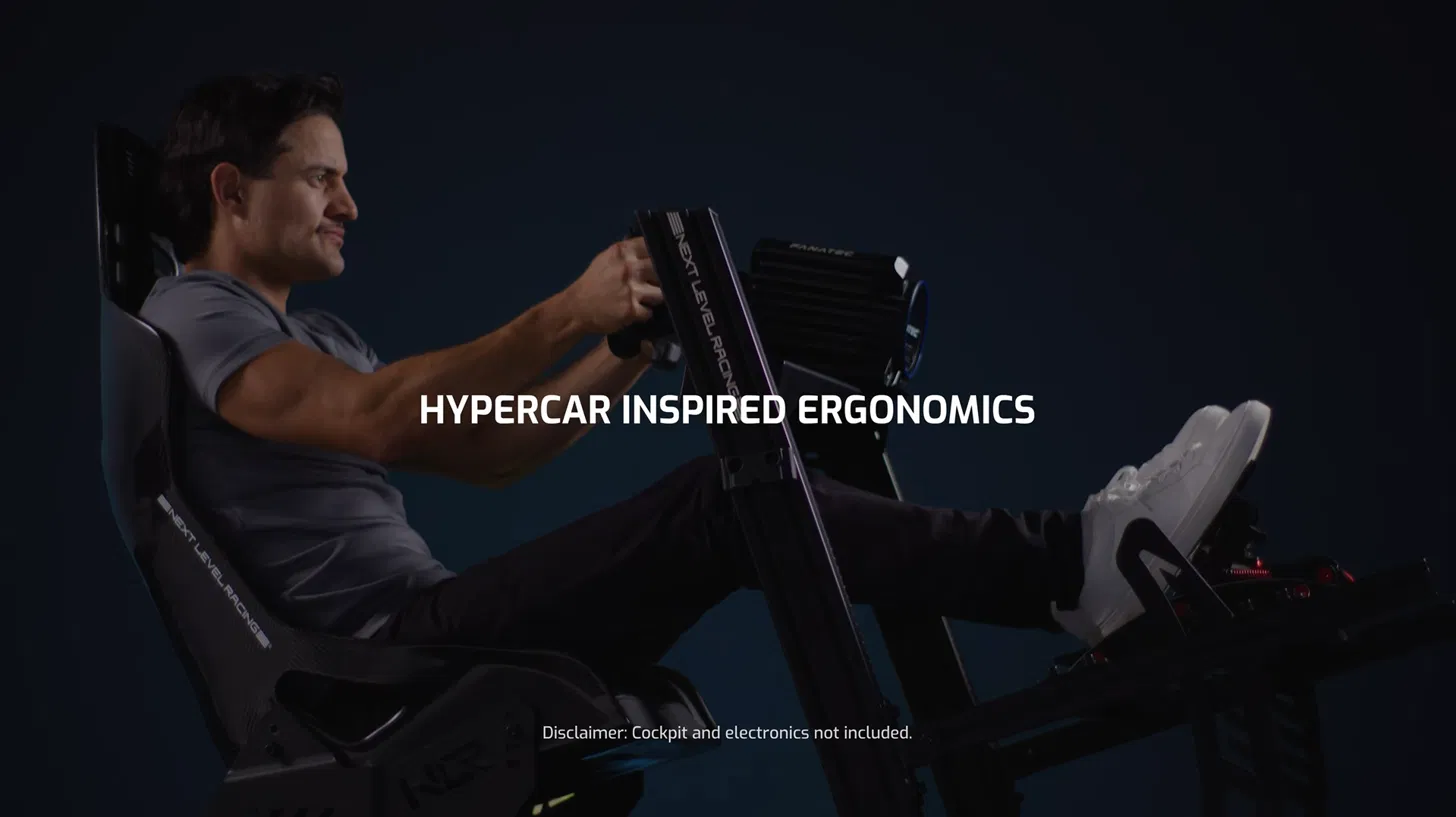
- Sculpted side bolsters and shoulder support for a fixed-back, GT-style position
- Precision-molded cushions: high-density foam, soft-touch synthetic suede, PU leather sides
- Removable cushion covers, so you can wash or swap them
- Bespoke side-mount brackets with multiple angle and height adjustments
- Rated for users up to a 36-inch waist
It ships well protected, wrapped and cushioned inside the box. You get the manual, mounting hardware, brackets, and a pair of gloves, presumably so you don’t fingerprint the high-gloss finish while installing it.
Installing the ES3 Isn’t a Ten-Minute Job
If you’re coming from a different seat, budget more time than you’d expect. Darin ran into the classic seat-swap headache: lining up the seat sliders with the T-nuts on his Sim Motion 160mm extrusion chassis. He got it wrong twice before landing it on the third try. At one point, he seriously considered skipping the sliders and bolting the ES3 straight to the chassis rail.
That’s not a knock on Next Level Racing specifically. It’s just what happens any time you move between seat brands. The ES3’s brackets sit a little taller than what he was running before. That pushed his wheel deck up and forced a re-tune of his whole driving position. If your current seat sits low, expect similar adjustments.
Once it’s in, the ES3 gives you real adjustability: two mounting holes in the back and four up front let you dial in the seat’s rake. Darin ended up fully reclined, back hole in the rear bracket, top hole up front, after starting more upright. He decided he wanted more of a laid-back GT position. Swapping between settings just means loosening a few bolts, no special tools required.
Next Level Racing ES3 Review: How It Feels on Track
This is where the ES3 earns its price tag. Darin’s word for it was “form-fitting,” and he wasn’t exaggerating. The fit is noticeably tighter and more structured than a cushioned bucket seat like his previous Cospit.
That tightness translates directly into feel. He picked up more of the haptic feedback from his V&M load-cell pedals through the seat itself, not just his feet. Braking in particular felt different: no flex, no give, just a direct connection to the rig. If you’re running anything with real resistance, a heavy brake load cell or a motion platform, that rigidity is the whole point. A seat that flexes under load is quietly eating some of the feedback you paid for.
One viewer who already owns Next Level’s ES1 bucket backed this up in the comments, calling it “solid as a rock.” That tracks with what Darin found stepping up to the ES3.
ES3 Fit and Sizing
Next Level Racing lists a 36-inch waist as the practical ceiling. Darin is around 35 inches, measured at the hips, and fits comfortably. His experience suggests that number holds up as long as your hip width is the limiting factor, not your overall build. If you’re right at 36 inches, you should still fit. Past that, you’re rolling the dice.
Where the ES3 Comes Up Short
To be clear about the tradeoffs, because they’re worth naming rather than glossing over:
- Price. $599 for the fiberglass edition is genuinely high for a sim racing seat, even if you think it’s justified. The carbon fiber edition at $1,399 is a much bigger ask.
- Installation friction. The bracket height difference from other seats may mean re-adjusting your entire wheel deck and monitor position, not just bolting in and going.
- The glossy finish scratches easily. Darin caught the seat’s edge on his rig while mounting it and put a visible scratch in the paint. If you’re installing solo, be careful.
- No visible harness routing protection. A viewer flagged that nothing obviously protects the finish where seatbelt or harness webbing would route. Worth checking with Next Level Racing directly if you run a harness.
- Sizing is a hard ceiling, not a soft one. At 36 inches and up, fit depends heavily on your specific proportions rather than being guaranteed.
Is It Worth It Without Motion?
You don’t need a motion rig to justify the ES3. Darin’s take is that the seat’s rigidity matters any time you’re running a decent load-cell brake, motion setup or not. A seat that flexes under braking works against your pedals. A no-flex fixed-back seat like this, or comparable options from Track Racer or Sparco, closes that gap. It’s just more pronounced, and more clearly worth the money, once you add motion into the mix.
Final Thoughts: Next Level Racing ES3 Review Verdict
The ES3’s whole pitch is that a rigid, form-fitting fixed-back seat changes how connected you feel to your rig. After installing and driving it, that promise holds up. The fit is tighter, the haptic feedback comes through more clearly, and there’s no flex under hard braking to second-guess.
The verdict: for $599, the fiberglass edition is a legitimate upgrade if you run a heavy load-cell brake or a motion platform and you’ve been feeling disconnected from your rig. It’s a harder sell on a lighter setup, where a flexier, cheaper seat won’t cost you much in feedback. The carbon fiber edition at $1,399 is really for buyers who already want the weight savings and don’t need convincing on price.
More broadly, seats like the ES3 signal where sim racing hardware is headed. Motion platforms and high-end pedals keep getting more common. The seat stops being an afterthought once everything bolted around it outpaces what it can handle.
For more seat and cockpit reviews, check out our RSeat RS1 Sim Chassis Review, our Playseat Sensation Pro review, or our coverage of Sparco Gaming’s Evolve seat lineup.