
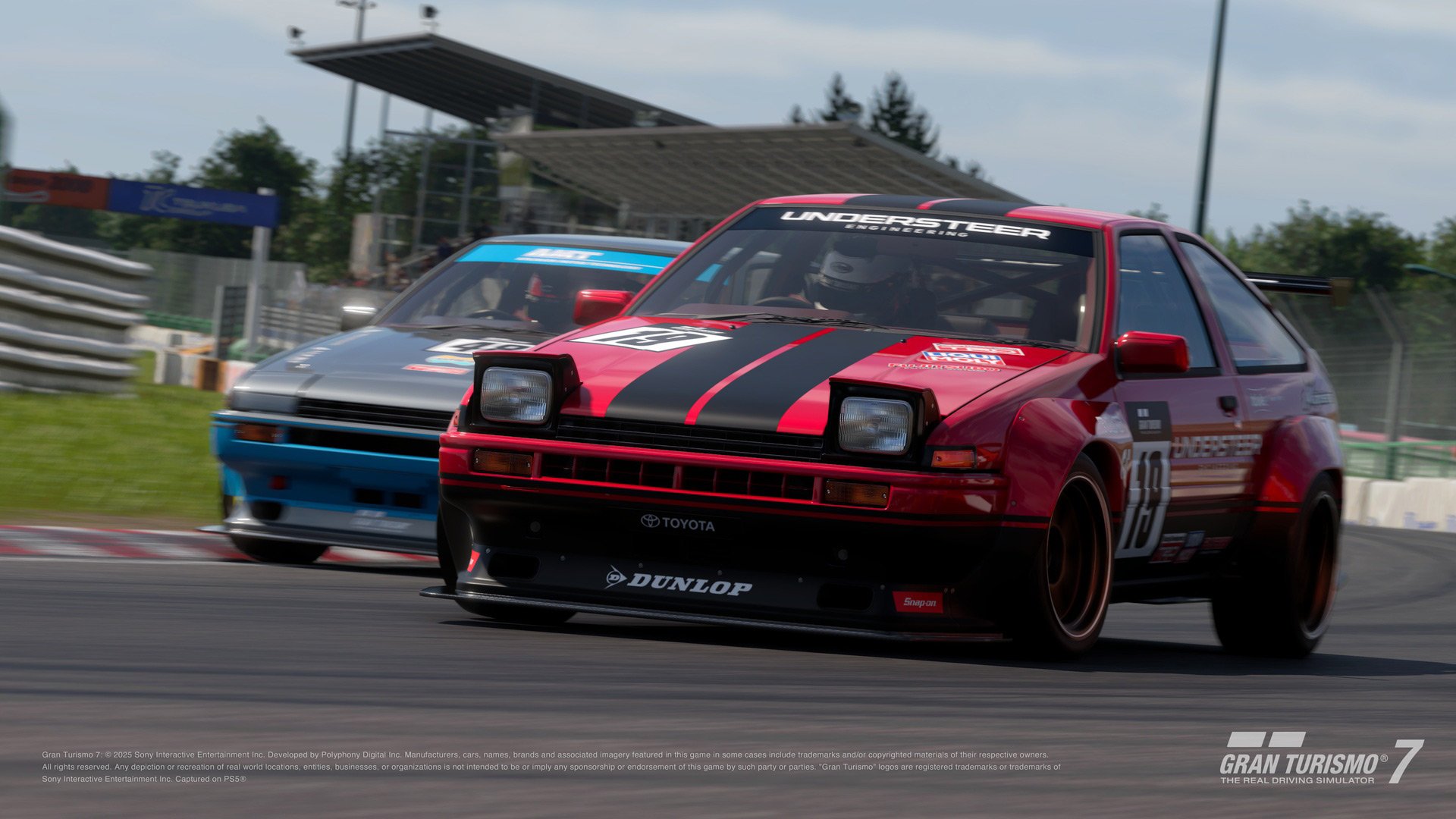
GT7 Power Pack isn’t just another DLC drop. It’s the first time Polyphony Digital has taken a big swing at what offline sim racing could become, and the result feels like a preview of the future. Whether you’re into AI that actually races you, curated challenges, or single player modes that go deeper than car collecting, this update is worth paying attention to.
Let’s get into why.
Why the GT7 Power Pack Matters Beyond the Base Game
At first glance, the Power Pack looks like a simple expansion. Fifty races, a web of themed routes, a chili pepper difficulty system and some wild modified cars. The real story is what all of this signals.
For the first time, GT7 leans fully into a curated racing path built for people who want actual competition, not rolling-start catch-up races or checklist-style events. This DLC has a personality. You’re not building a garage or optimizing your own tune. You’re stepping into a set of handcrafted challenges where the cars, the rivals and the difficulty all feel intentional.
It’s the closest GT7 has come to saying that single player racing deserves as much love as online Sport Mode. And it reminds a lot of longtime fans of why they fell in love with the series in the first place.
Sophy AI Is More Than Faster Lap Times. It’s Adaptive Racing
AI has always been a sore spot in racing games. Rubber banding, predictable lines, no real sense of racecraft. Sophy is the first real attempt to break that pattern, and the Power Pack is the first time we’ve seen it used in a structured mode that pushes you to react instead of memorize. Players are already noticing how different the Gran Turismo 7 Power Pack feels when Sophy takes control of the grid.
Sophy defends the inside line. It sets up cutbacks and squeezes you on exit without punting you into the grass. The AI also makes decisions that feel like a human opponent trying to outsmart you, not a CPU chasing a target lap time.

Is it perfect? No. Players are already calling out odd collision behavior and some over-the-top launches at the start of races. But even with its quirks, this is the closest mainstream sim racing has come to AI that actually races.
For offline players, this is huge. Not everyone wants to jump into daily races or deal with online chaos. Having an AI system that creates real tension is something the community has been asking for since the PS2 era.
Curated Cars and Routes Feel Like a New Kind of GT Single Player Design
The first thing you notice in the Power Pack isn’t the AI. It’s the cars. These aren’t simple tunes you could build in the garage. They’re character pieces. Loud, lively, overbuilt machines that feel like the GT team finally got to let loose.
Each path has its own vibe. American muscle. 90s Japanese icons. Historic rally and race cars. The events are structured, the choices are limited and the whole thing feels focused. It’s refreshing.

There’s something addictive about unlocking the next event and seeing what wild creation is waiting for you. It’s a side of GT that’s been missing for a long time. Instead of grinding for credits or min-maxing parts, you’re just racing. And for a series built on driving, that feels long overdue.
The Community Loves the Challenge, But Not All the Friction
Players are split, and that’s actually a good sign. When a DLC gets this many strong reactions, it means it hit somewhere meaningful.
People are loving how intense the races are. Some say these are the best AI battles they’ve ever had in GT. Others are obsessed with the car setups and how alive they feel, especially in VR. And plenty are calling this a return to form for a franchise that’s been searching for its identity since GT5.
On the other side, the complaints are consistent. Starts feel unfair, especially with the higher difficulty cars. Certain AI behaviors break immersion. The mid-race save system in endurance events resets the pack in strange ways. And many players wish they could keep more of the special cars without grinding stars.
These are real issues, but they’re also solvable. What matters is that players are engaged enough to care, because that level of engagement is exactly what single player GT has been missing.
What the GT7 Power Pack Signals for the Future of Sim Racing AI
This is the big takeaway. The Power Pack isn’t just content. It’s a proof of concept.
If Polyphony builds on this, we could finally see a GT career mode that feels alive. A mode where AI rivals evolve, react and adapt. A mode with season structure, team dynamics, endurance strategy and long-term progression that isn’t just collecting cars.
And it’s not just Gran Turismo. Every major sim is facing the same question. Forza Motorsport is rebuilding itself. ACC 2 is on the horizon. AMS2 continues to refine its AI. iRacing is growing its offline offerings. Everyone sees the same trend: there’s a huge audience that wants deep single player racing, not just online matchmaking.
Sophy could be the spark that pushes the entire genre forward. The GT7 Power Pack has its rough edges, but it’s already shaping expectations for what a modern offline racing experience should feel like.
The Bottom Line
GT7’s Power Pack isn’t important because it adds 50 new races. It’s important because it points to a future where offline racers get the same respect as online players. A future where AI isn’t an afterthought. A future where curated racing experiences exist alongside traditional GT progression.
If this is the direction Polyphony is heading, the Power Pack won’t be remembered as a DLC. It’ll be remembered as the moment Gran Turismo stopped looking backward and started aiming at what single player sim racing could actually become. If Polyphony builds on the GT7 Power Pack, it could redefine what single player racing looks like for the entire genre.
And honestly, that’s a future worth getting excited about.