

If LMU daily races show how drivers learn the sim, then, in contrast, LMU endurance racing shows what happens once that learning is put under real pressure.
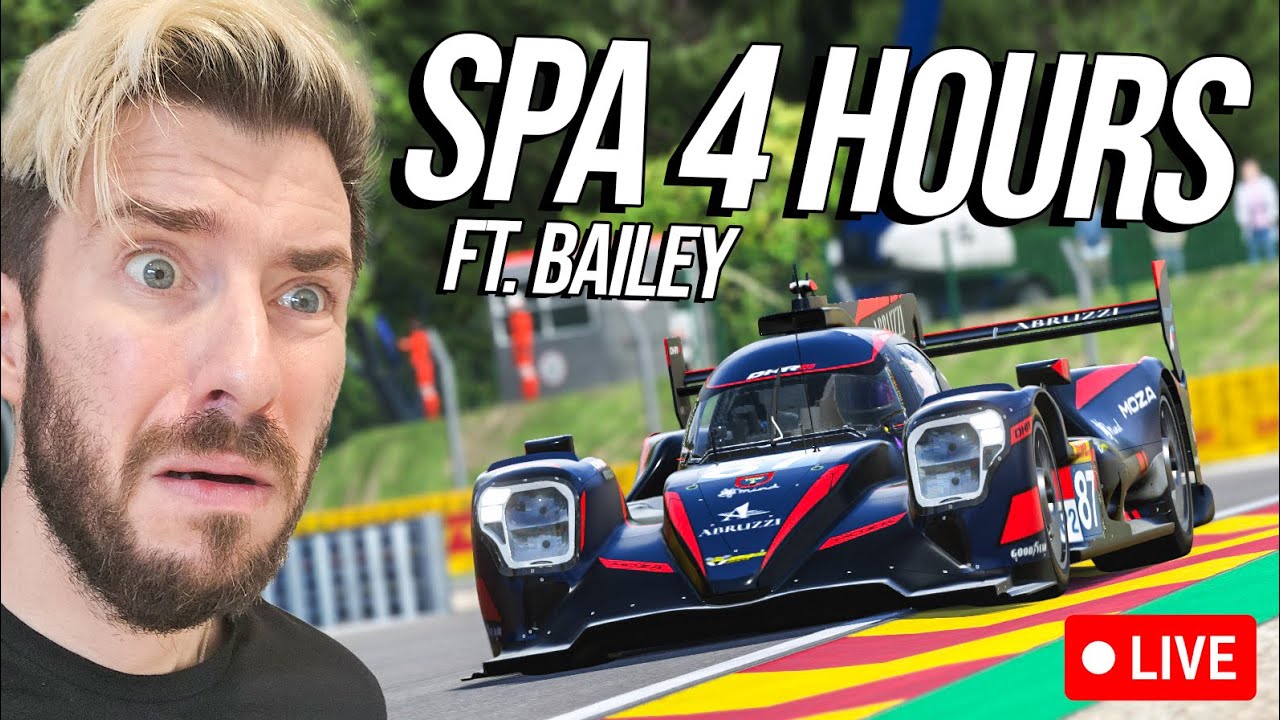
Over the last few days, as a result, multiple creators independently gravitated toward long-form endurance events in Le Mans Ultimate. Jardier running solo in dense top splits with mixed conditions. Jimmy Broadbent and Bailey committing to a full four hours at Spa, as seen in Jimmy’s recent Le Mans Ultimate endurance stream on YouTube. Random Callsign settling into long stints where every issue has time to compound.
None of these sessions are framed as highlight reels. They’re framed as tests. And that’s what makes them revealing.
LMU Endurance Racing Changes the Conversation

Sprint races reward reaction speed. By contrast, endurance racing rewards decision-making.
Once races stretch past the point where you can brute-force mistakes, the sim starts asking different questions. How hard can you push without cooking the tires? At that point, traffic stops being about a single corner and starts defining entire stints. And even then, when something feels slightly off, you still have to respond knowing there’s an hour left to run.
In Jardier’s solo endurance runs, that pressure shows up immediately. He’s constantly narrating context. Fuel load. Tire temperature. Field density. Not because it’s entertaining filler, but instead because those variables actively shape every lap. One poor traffic interaction doesn’t cost a position. It reshapes the next twenty minutes.
That’s something daily races hint at, as we’ve already seen in our look at LMU daily races, but endurance makes unavoidable.
Fatigue Becomes a Performance Factor
One thing endurance racing exposes quickly, however, is mental load.
As sessions drag on, it’s not outright mistakes that hurt most. It’s impatience. Slightly earlier throttle. A marginally riskier overtake. Choosing to force an interaction instead of waiting one more corner.
Because races run so long, you can hear drivers actively managing themselves, not just the car. Jardier sets rules for how he reacts to contact. Random Callsign talks through staying calm when things go wrong. Jimmy openly acknowledges when they’re just trying to survive a stint rather than gain time.
That self-management doesn’t exist in short races. There’s no room for it. Endurance racing makes it part of the skill set.
Traffic and Weather in LMU Endurance Racing
That’s why Spa keeps showing up.
At Spa, long lap times amplify everything. Traffic costs more. Weather changes matter longer. Tire behavior becomes something you live with, not something you reset away.
In Jimmy and Bailey’s four-hour race, the looming threat of weather affects decisions long before rain actually arrives. Do you stay out? Do you commit to a stint knowing conditions might change halfway through? Even when the rain never fully commits, the uncertainty shapes the race.
That uncertainty mirrors what you already see in multiclass racing in sim racing. The faster class is always arriving. The slower class is protecting its own race. Endurance simply stretches that tension across hours instead of laps.
When something goes wrong at Spa, you don’t just lose time. You carry it forward.
Team Racing in LMU Endurance Racing
Meanwhile, team races expose something solo sessions can’t. Communication under pressure.
Jimmy and Bailey’s race isn’t about flawless execution. It’s about coordinating stints, timing driver swaps, reacting to what’s happening elsewhere on track, and adjusting expectations in real time. Decisions aren’t isolated. They affect your teammate’s next hour in the car.
At that point, endurance racing stops being a driving exercise and becomes racecraft. When to push matters. Protecting the car matters just as much. And sometimes the smartest call is accepting a small loss instead of turning it into a bigger one.
Those skills don’t show up on timing sheets. They show up in who’s still running clean three hours later.
Why Creators Keep Choosing Endurance Formats
By now, a clear pattern is forming.
Daily races show progression. Multiclass races add pressure. Endurance racing, meanwhile, combines both and removes the safety net.
Overall, Le Mans Ultimate, for all its rough edges, holds together best when it’s asked to do this kind of work. In practice, full grids matter. Likewise, traffic matters. And ultimately, strategy matters. And as a result, mistakes aren’t instantly fatal, but they’re never free.
That’s why creators keep choosing endurance formats right now. Not because they’re perfect, but instead because they’re honest. The sim doesn’t let you hide. It forces you to adapt, communicate, and manage yourself over time.
Sprint races show speed.
Daily races teach habits.
Ultimately, LMU endurance racing reveals whether those habits actually hold up.
Right now, that’s exactly where LMU is being tested the hardest.