

Last week, we showed you previews of two of the WTCC cars coming to RaceRoom Racing Experience. Now, Sector3 has now released the full roster of cars coming with the World Touring Car Championship pack!
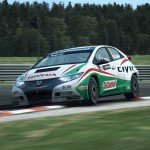
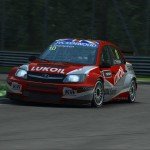

The WTCC pack for RaceRoom Racing Experience will feature five cars from the 2013 season:
- Honda Civic
- Chevrolet Cruze
- BMW 320
- Lada Granta
- SEAT León
The other cars, such as the Volvo C30, were not included in the pack due to the fact that they were not officially entered. To my knowledge, no new circuits will be added in the pack. This will be the first WTCC content Sector3 has released since 2011, when they released the 2010 season for Race 07. A release date has not been announced yet, but it should be available soon.
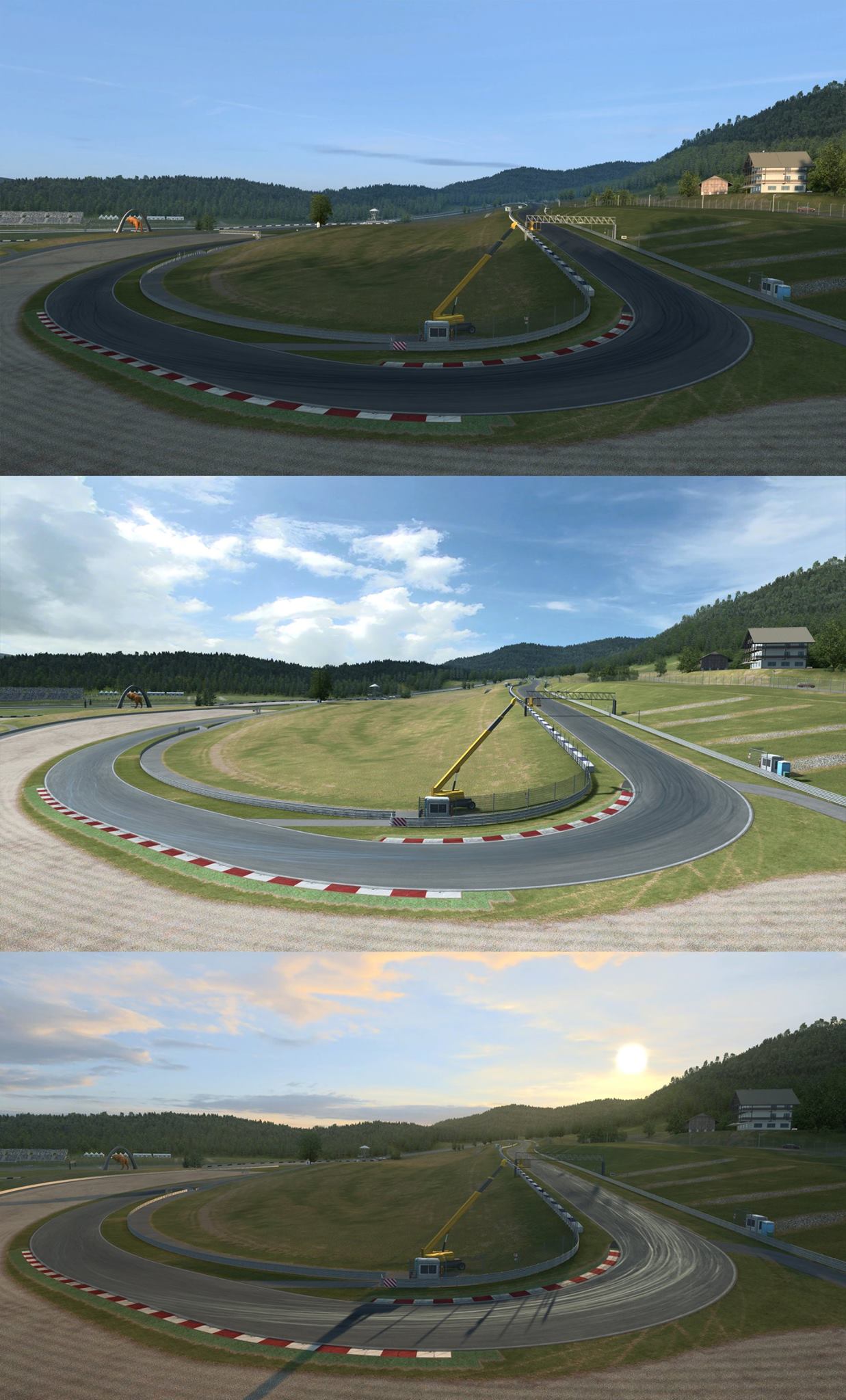
In other RaceRoom Racing Experience news, Sector3 has announced that the next update will bring “Time of Day” to the sim. While it is not dynamic, it will allow for five presets, ranging from early morning to late evening. Judging from the shots above, it definitely looks impressive in the modified ISI engine! I’m definitely looking forward to giving this feature a go in the next update.
Are you looking forward to the next update for RaceRoom Racing Experience, as well as the WTCC Content? Let us know in the comments below!
Yeah, I’m looking forward to this content. I always enjoyed this series with Race 07. And the Time of Day feature will be cool too. I think too much stock is put into “dynamic lighting” and “Day/Night” cycles in racing sims (and weather, for that matter) a simple “mood change” like these settings will be fine for me. Just enough to give the track a different look.
yeah it’ll be pretty cool!
i simply just can’t understand why some people on the leaderboard challenges are 3 seconds faster while i’m hauling so much ass!
i can’t believe they are cheating so it must be down to setups right?
Yea probably setups. I don’t know jack about changing the settings on a car. Aside from playing with wing angles I’m clueless. LOL. I just basically run with the default setups and I’m usually about 5-8 seconds behind the leaders. Ouch.
thing is, i know what camber is and toe-in, but things linke bump stop and anti-roll bar, i know what they do but can’t find a harmonious setup for a track.
I think alot of pro drivers (seeing as their profile pics are them racing karts) know how to setup a car better.
Cudos to them off course, but it sucks when ur racing online and u loose 0.5sec a lap, that’s not fun online experience.
I’ve had nice close races but now and then, there’s a sort of marc marquez character too
here something i found out there about setup, (i also am not very good with it )
enjoy
Simple Car Set Up Guide
Front Damper Fast Bump:
A softer setting means more grip when steering,which is good
for tighter tracks.A stiffer setting will increase understeer,a
softer setting will increase oversteer.
(oversteer) Softer – + Stiffer(understeer)
+
Front Damper Slow Bump:
A stiffer setting will make the car feel snappier,though it will
also be more unstable.Use stiffer settings to increase oversteer
and to make the car turn more sharply.
(understeer) Softer – + Stiffer(oversteer)
stable unstable
Front Damper Fast Rebound:
Adjusts how quickly the front wheels return to a steady state
over bumps .Stiffening the front will result in less oversteer
over bumps and kerbs.
(oversteer) Softer – + Stiffer(understeer)
Front Damper Slow Rebound:
Adjusts how quickly the front of the chassis sets into a corner.
Stiffing the front will result in less oversteer in turn-in and
corner exits.
(oversteer) Softer – + Stiffer(understeer)
Rear Damper Fast Bump:
A softer setting means more grip when steering,which is good
for tighter tracks.Set it stiffer to increase understear,or to
make the car turn less sharply on faster tracks.
(oversteer) Softer – + Stiffer(understeer)
Rear Damper Slow Bump:
The stiffer the setting,the snappier and tighter the car will
feel,though it will be more unstable.Use stiffer settings to
increase oversteer,or to make the car turn more sharply.
(understeer) Softer – + Stiffer(oversteer)
stable unstable
Rear Damper Fast Rebound:
Adjust how quickly the rear wheels return to a steady state
over bumps .Stiffing the rear will result in more oversteer over
bumps and kerbs.
(understeer) Softer – + Stiffer(oversteer)
Rear Damper Slow Rebound:
Adjust how quickly the rear of the chassis sets into a corner.
Stiffing the rear will result in more oversteer in turn-in and
corner exits.
(understeer) Softer – + Stiffer(oversteer)
Front Sway Bar:
Increase stiffness to reduce body roll.Too much stiffness can
cause the inside wheels to lift off the ground during cornering.
A stiffer setting at the front moves the balance towards
understeer.A softer setting moves the balance towards
oversteer.
(oversteer) Softer – + Stiffer(understeer)
Rear Sway Bar:
Increase stiffness to reduce body roll.Too much stiffness can
cause the inside wheels to lift off the ground during cornering.
A stiffer setting at the rear moves the balance towards
oversteer.A softer setting at the rear moves the balance
towards understeer.
(understeer) Softer – + Stiffer(oversteer)
Front/Rear Spring Rate:
Determines the softness or hardness of the suspension
springs .Stiffer springs will improve car responsiveness.
Excessively stiff springs will cause the wheel to lose contact
with the ground in rough sections .A softer rear spring setting
can also add in rear wheel traction accelerating out of corners
for rear wheel drive cars.
Stance:
Lowering the ride height lowers the center of gravity and
increases overall stability.Too low a ride height can cause the
suspension to bottom out.Also a lower ride height can give better aero dynamic characteristics resulting in higher top speed.
Front Ride Height:
Allows lowering or raising of the front height to adjust rake
and total travel before bottoming .A higher front ride height
will aid acceleration and braking.Rear wheel drive cars can
generally benefit from less forward rake more than front wheel
drive cars.
Rear Ride Height:
Slightly higher rear ride height than the front creates a slight
forward rake,witch means more grip when cornering.You
generally see front wheel drive cars with more forward rake.
Steering lock:
Adjust the steering lock maximum.Use higher lock for more
responsive steering.So more lock works for tracks with tighter
corners.
Castor Angle:
Most cars are not particularly sensitive to caster settings,but
used in conjunction with other settings,a more positive value
can aid straight line driving,wile a less positive one can make
your car react quicker to steering .A lower castor angle can
really be helpful in turning through a tight corner quicker.
Front/Rear Toe Angle:
Adjusts the horizontal angle of the front wheels.Toe-in creates
better straight line stability,but sacrifices responsivness.Toe-
out improves responsiveness,but sacrifices straight line
stability.Set up the front with negative to (toe-out)and rear
with positive(toe-in).Large amounts of rear toe-in can help in
acceleration out of corners for rear wheel drive cars.High toe-
out in the front can help the car turn through a corner
better.High toe settings both front and rear can build
excessive tire heat and also limit top end speed.
Front/Rear Camber:
Adjust the vertical angle of the wheel. Increasing negative
camber can increase cornering,but impair acceleration and
braking .Adjust camber settings so that tire heat is evenly
distributed across the tire at the apex of the turn.You should
try to strike a good balance for the majority of the corners of
any given track .I have generally found most people set there
cars up with way to much negative camber. I find around
negative 2.4-3.0 in the front and 1.5-2.5 in the rear works
well for most cars .I like to run somewhat low camber for rear
wheel drive cars in the rear.It can help with accelerating out of
corners since there is more tire in contact with the pavment.
Front Tire Pressure:
To deal with understeer,decrease front tire pressures.
Understeer is when the front end wants to run wide in a
turn.Set tire pressure too high or too low though and you’ll
lose overall grip and generate excessive tire heat.
Rear Tire Pressure:
To reduce oversteer,decrease rear tire pressure.Oversteer is
when the back end of the car tends to slide to the outside of a
corner under strong steering.As with front tire settings,set this
too high or too low and you’ll lose overall grip and generate
excessive tire heat.
Brake Pressure:
Adjusts the total applied brake pressure.Less brake pressure
will reduce the tendency to lock up the brakes,but will
increase your stopping distance .I find reducing pressure on
front wheel drive cars to around 70 percent reduces the
tendency for the back end to swing out under braking into a
corner.Also formula cars tend to need a reduced pressure setting to combat locking the brakes so easy.
Acceleration lock:
Adjust’s the L.S.D (limited slip differential) lock under
acceleration .Higher settings(more slip before full
engagement) give better traction coming out of corners,but
will limit your ability to turn. Lower settings will make it easier
to turn,especially in tight corners,but give you less
traction.Note this setting in most sims is somewhat
confusing.In most sims they usually call it the power setting.You must lower this setting in the garage to give you the effect of a higher L.S.D slip setting.
Deceleration Lock:
Adjusts the L.S.D lock under deceleration (coast).High settings
make you more stable decelerating into a corner,but limit the
car’s ability to turn. Lower settings reduce stability when
decelerating into a corner,but improve turning ability.Very low
coast settings will make it very easy to spin out decelerating
into a corner but will help slow you down faster if you use it
right.I like to lower my coast until I start to have problems
with spinning out into a corner and then raise it back a bit so I
strike a nice balance of stability and deceleration effect.
Preload:
Adjust the amount of built in lock before any acceleration or
deceleration effects take place,as in a neutral throttle
condition.This setting will effect how quickly the transition
from acceleration to deceleration lock occurs. Lower settings
improves maneuverability,higher settings reduce it.
Putting it all into practice:
Car setup is not an exact sience.What works for one may not
work for another because everyone likes there cars to feel and
drive a certain way.If you want to really start to lower those lap
times you must first figure out how you like your cars to
handle,and what best suits you skill level.Once you know
exactly what you are going for then you can start to apply this
information to your setups and truly have a car that is set up
perfectly for you.
great! very helpfull, i’ll try some stuff out. Thanks for sharing