

This Ride 6 review takes a look at Milestone’s latest motorcycle racing game, examining what’s improved, what feels familiar, and why the community remains divided. That’s not necessarily a bad thing. Depending on who you ask, it’s either the series settling confidently into what it does best or another step that doesn’t quite go far enough.
Ride 6 launches February 12 on PC, PlayStation 5, and Xbox Series X|S, with three days of early access tied to the Ultimate Edition. Milestone built Ride 6 on Unreal Engine 5, introduces off-road racing for the first time in the series, and splits its handling into Arcade and Pro modes. On paper, it sounds like a meaningful evolution. In practice, it’s more nuanced than that.
This review is informed by impressions and analysis shared by TraxionGG and OverTake_gg, alongside broader community discussion around Ride 6’s launch and early access period.
A Gran Turismo-style bike game that still knows its lane
The Ride series has always aimed to be a Gran Turismo-style experience for motorcycles, and Ride 6 sticks closely to that identity. You’re buying new and used bikes, upgrading performance parts, customizing liveries and rider gear, and working through a long career progression built around racing disciplines rather than open-world exploration.
Milestone leans into a new Ridefest theme this time, framing the career as a global motorcycle festival. It’s visually slick and gives the menus a clear identity, but both reviews point out that the festival framing doesn’t materially change how the game plays. You’re still selecting events through menus, not roaming freely between them, and there’s no narrative thread tying the disciplines together.
The community reaction reflects that split. Some players enjoy the cleaner presentation and themed structure. Other players openly say they’re tired of festival-style racing wrappers and want Milestone to either drop the concept entirely or commit to an open-world approach. That desire for a bike-focused Horizon-style game comes up again and again, but Ride 6 doesn’t attempt to be that.
Ride 6 Review: Career Mode, Handling, and Game Structure
One of Ride 6’s most noticeable improvements is its career structure. Unlike Ride 5’s more rigid progression, Ride 6 no longer forces you to complete every event in a series. You can choose which races to take on, which makes the grind feel less suffocating and more player-driven.
Milestone estimates over 30 hours to complete the career, which culminates in boss-style challenges against motorcycle legends. Names like Casey Stoner and Guy Martin headline these chapters, and completing them unlocks exclusive rewards. Both reviews agree that this adds variety, even if the broader career loop still leans heavily toward repetition.
That sense of grind is something longtime players continue to debate. Some see Ride 6 as a return to form after Ride 5, while others remain unconvinced that the structure has meaningfully evolved since earlier entries. As this Ride 6 review shows, Milestone focused more on refinement than reinvention.
More bikes than ever, with disciplines that finally feel distinct
Ride 6 launches with over 340 motorcycles across 21 manufacturers, spanning seven categories. Sports bikes, naked bikes, enduro, motard, baggers, scooters, and new Maxi Enduro machines all make the cut. This is the largest bike roster the series has seen at launch, including DLC.
Where things feel fresher is how those categories now behave relative to each other. Off-road racing is new to the series, and while opinions vary on its execution, both reviewers agree it helps break up the experience. Jumping from a high-speed endurance bike to a dirt-focused setup or a smaller machine actually feels like a shift in discipline rather than a cosmetic swap.
That said, not every player has bought into the off-road content. Some players feel the tracks are too flat and forgiving, and that the bikes themselves don’t feel different enough from their asphalt counterparts. Others appreciate the added variety, even if it doesn’t fully live up to rally-raid expectations.
Ride 6 Review: Handling Choices Matter More Than Before
For the first time, Ride offers a clearly defined Arcade and Pro handling split from the start. Milestone previously explored a similar accessibility approach in its MotoGP titles. Milestone designed Arcade mode to be accessible and forgiving, removing the risk of crashing and opening the game up to riders who love motorcycles but struggle with traditional sim controls.
Pro mode is where Ride 6 shows its depth. Weight transfer, braking precision, throttle control, and on-the-fly electronics adjustments all matter. It can feel heavy and demanding at first, but when it clicks, both reviews describe it as deeply satisfying. Importantly, assists can be mixed and matched, letting players tailor the experience rather than commit fully to one extreme.
Community sentiment here is predictably divided. Some players feel the handling has become too safe or too familiar. Others appreciate that Milestone has created a wider entry point without abandoning complexity for experienced riders.
Tracks, presentation, and that UE5 polish
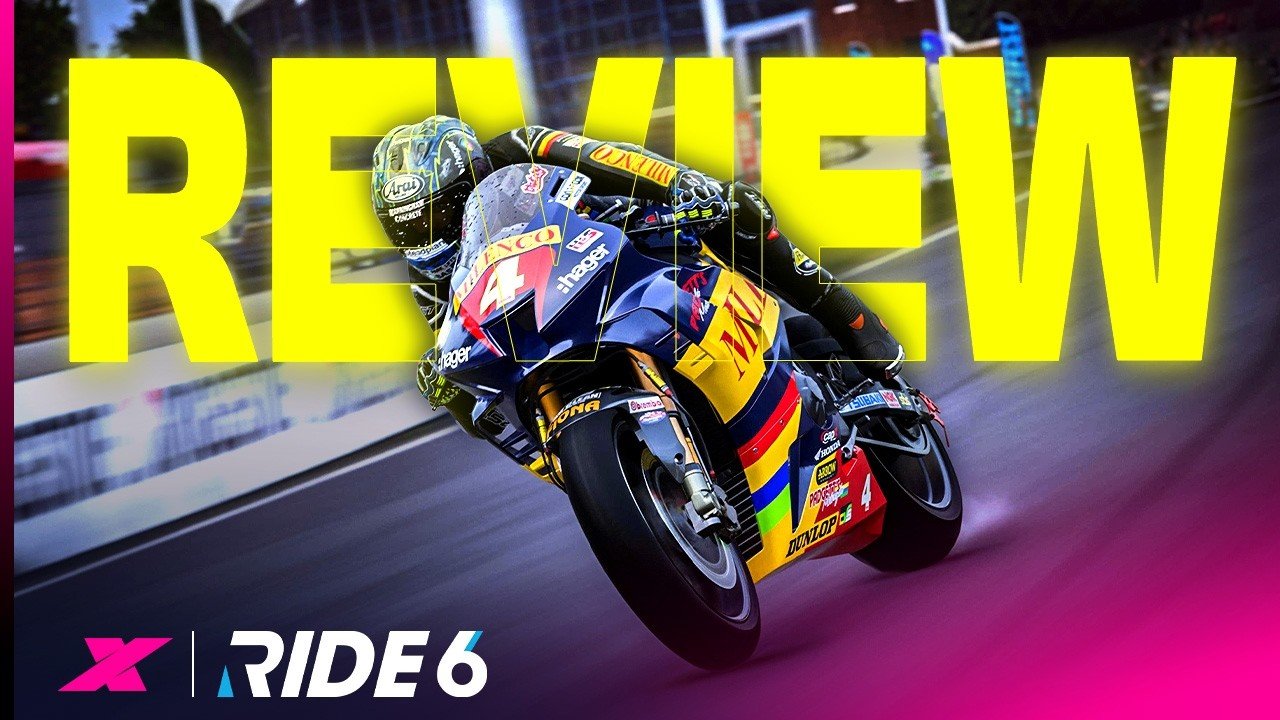
Ride 6 includes 45 tracks at launch, 11 of them new to the series. Real-world circuits like Suzuka, Valencia, and Autodromo Internacional do Algarve sit alongside road racing favorites and fictional layouts. Certain tracks, like Sugo and Blue Wave Circuit, are repeatedly highlighted as standouts, especially for endurance racing.
Visually, this is one of the strongest motorcycle games available. Built on Unreal Engine 5, Ride 6 continues Milestone’s long-running use of Epic’s engine across its MotoGP and Supercross titles. Unreal Engine 5 brings dynamic weather, full day-night cycles, and highly detailed bike models. Both reviews praise how immersive the game looks with the HUD disabled, particularly in rider camera and wet conditions.
Audio also earns strong marks. Engine notes vary convincingly across configurations, with clear differences between high-revving inline engines and lower-revving twins. Minor complaints remain, but overall sound design is seen as a strength rather than a weakness.
AI chaos, customization depth, and multiplayer expectations
AI opponents scale automatically to your skill level, creating close races without manual difficulty tuning. They’re aggressive, unpredictable, and occasionally unhinged. Some players love that intensity. Others find it frustrating, especially when collisions feel unavoidable.
Customization remains one of Ride’s strongest pillars. Performance parts affect both stats and visuals, licensed rider gear is plentiful, and the livery editor returns with deep sharing options. Multiplayer supports crossplay across all platforms, with monthly challenges planned post-launch. Population levels remain an open question, as with most niche racing titles.

Ride 6 Review Verdict: Who It’s For and Who May Skip It
From a technical standpoint, this Ride 6 review makes it clear that the fundamentals remain strong. Ride 6 is clearly better than Ride 5 in key areas. Career flexibility, handling options, visual fidelity, and bike variety all move the series forward. At the same time, it doesn’t reinvent anything. The Ridefest theme feels more cosmetic than structural, off-road racing doesn’t fully reach its potential, and the long-term grind is still very much part of the package.
For riders who’ve stuck with the series, Ride 6 feels like a confident refinement. For those burned by Ride 5 or hoping for a bold new direction, it may feel too safe. What’s undeniable is that Milestone still delivers one of the most complete two-wheeled racing experiences available right now, even if the genre itself is still waiting for its true breakout moment.
Ultimately, this Ride 6 review reflects a series that knows what it is, even if players still want more from it. If you’re on the fence, it’s worth taking a close look at whether those refinements line up with what you actually want from a motorcycle game in 2026.