

Every couple months, the sim racing vs real racing debate comes back around, and it usually splits the room fast.
Does sim racing actually help you become a real-life racing driver? Or is it just a fun way to feel fast in your office?
Jimmy Broadbent tackles this head-on in his video, Can Sim Racing ACTUALLY Prepare You For Real Racing? And it’s worth watching for one simple reason. He’s not speaking from theory. He started late. He hadn’t been in a race car before. Sim racing came first. He walks through what carried over, what didn’t, and what surprised him once there were real consequences attached.
But the sim racing vs real racing conversation isn’t just happening on YouTube anymore. We’ve already been asking similar questions about sim racing real-world feel as physics, feedback, and realism keep improving.
The comments under Jimmy’s video are a live snapshot of where the community’s at right now. It’s a mix of yes absolutely, yes but, and personal stories where sim instincts kicked in on real roads and real tracks.
So let’s talk about sim racing vs real racing the same way. Not as a motivational poster. Not as a dunk on sim racing. Just a look at what actually translates, what doesn’t, and why more people are comfortable saying the overlap is real.
The stuff that translates is real, and it’s not subtle
Jimmy’s core point is that sim racing can give you a very strong baseline for how a car should go around a circuit. He says lap times can be comparable. Apex speeds can be close too. Braking zones can be very similar, depending on the car and the sim. More importantly, he points to specific skills the sim teaches well. Trail braking. Weight transfer. Reading what the car’s doing as you brake, turn, and get back to throttle.
He frames it like a theory test. You learn the concepts and you learn the language of driving. Then you show up in the real world and you find out how that knowledge behaves under pressure.
That idea lines up closely with how real driver training schools talk about simulators too. Allen Berg Racing Schools, one of the more established professional programs, describes sim training as a way to build fundamentals like vision, consistency, and understanding how a car responds before you ever turn a real lap. Not as a replacement for driving, but as a way to compress the learning curve so your first real sessions aren’t spent just figuring out what’s going on.
That shows up in the community stories as well, just from different angles. One person talks about locking up on oil on a downhill offramp and catching it, and says it wasn’t anything they hadn’t felt in a sim a thousand times. Another describes a sketchy moment on the autobahn in light rain where the rear stepped out, and credits sim drifting practice for the save.
There’s a theme there. Sim racing isn’t just about lap times. It builds pattern recognition. When something weird happens, your brain doesn’t freeze as easily because you’ve seen versions of it before.
Track knowledge is the quiet superpower
And then there’s track knowledge. Jimmy points out something every sim racer already understands intuitively. You can do unlimited laps. You can learn a circuit until it’s burned into your memory. He uses the Nürburgring Nordschleife as his example, saying he’d been learning it for years in games like Gran Turismo 4 and that when he arrived there in real life, he already knew where he was going. He didn’t have to spend days just figuring out the map.
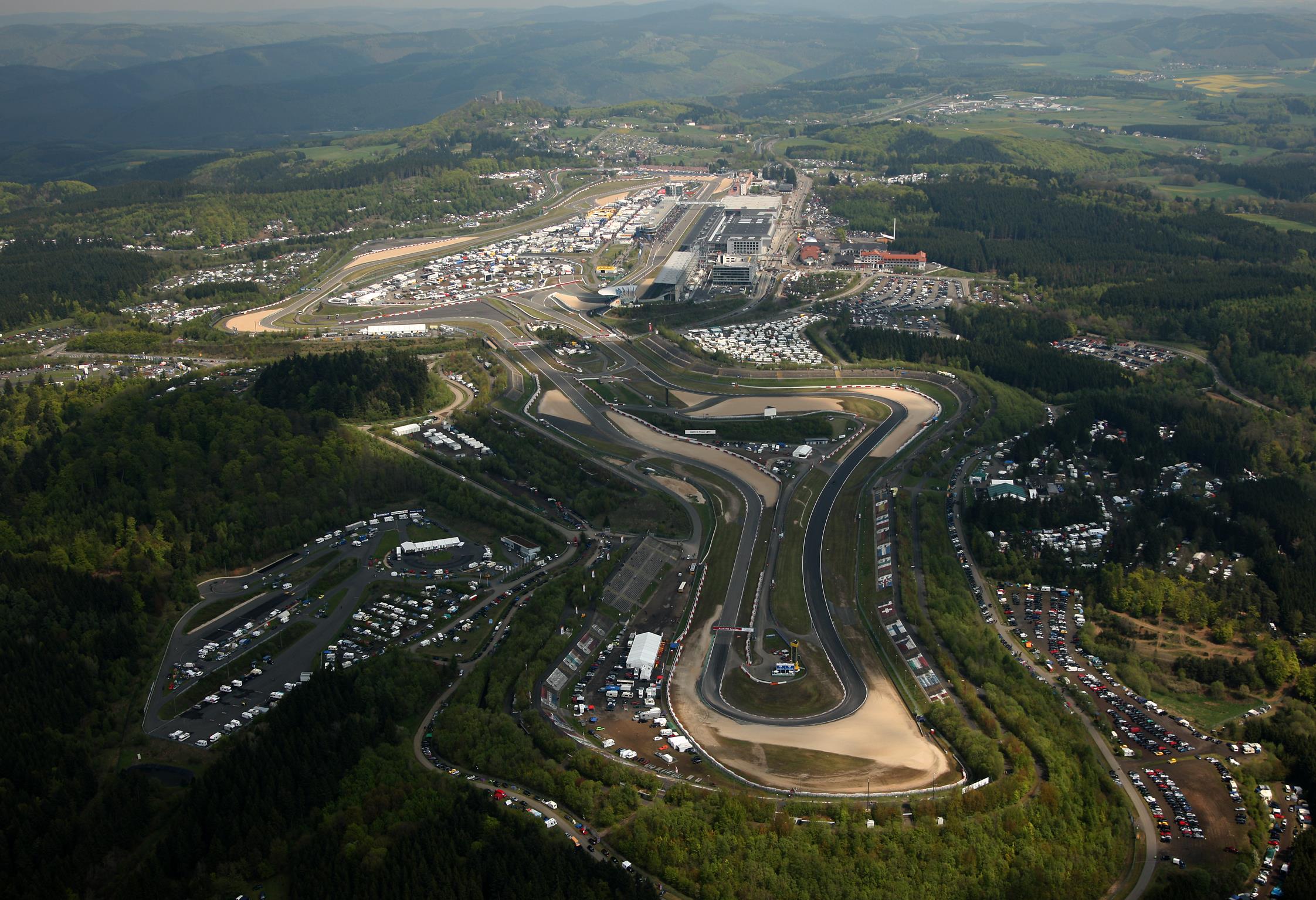
That’s not just anecdotal anymore. In late 2025, the German motorsport federation announced that sim racing experience can now count toward part of the Nürburgring licensing process. Not a full replacement, but an official acknowledgment that virtual track time has real training value.
People talk about this constantly in the comments too. Buying a track in Assetto Corsa before a track day. Turning up to Oulton Park already knowing every corner. Being quicker early in the day because the layout is already wired into your brain.
That’s not magic. That’s just reps.
Where sim racing falls short compared to real racing
Jimmy doesn’t pretend the sim and real life feel the same. His biggest disconnect point is feedback. In the sim, you’ve got force feedback through the wheel, but you’re missing the physical cues your body gets in a real car. The g-forces. The vibrations. The way the car communicates through your whole body, not just your hands.
He gives a really specific example that matters. He says braking is a strength for him in real life, but in the sim he struggles with it, because in real life he can feel deceleration and use that as information. In the sim, that information isn’t there in the same way.
That’s a useful detail because it explains something a lot of people experience but don’t know how to articulate. Why someone can feel confident and precise on real brakes but weirdly inconsistent in a sim. Or the opposite.
Then he goes into tires and basically argues this. In sim racing, tires can be more sensitive to driver input. In real life, tires are more sensitive to the environment. Temperature, track state, surface changes, and conditions matter more than tiny steering corrections.
He points out that a lot of sim practice happens in ideal conditions, which can make you good at one very specific version of the track. Real tracks don’t stay in one version.
That’s the kind of reality check sim racers actually need, especially if they’re using sim training as a shortcut to confidence instead of as a tool.
Wet weather, fear, and consequences are where the reset button disappears
The biggest reality gap isn’t physics. It’s risk.
Jimmy’s blunt about it. Sim racing can’t prepare you for the fear barrier. In a real car, you smell it, you hear it, you feel vibrations, and you’re aware you’re in a metal box that costs real money. That changes how you drive, because there’s no reset button.
He also calls out wet driving as one of the hardest things to learn, and says there isn’t a completely realistic wet handling model in any sim. Real wet driving involves tire temperature, changing rain intensity, wet lines, and avoiding rubbered-in surfaces that get slick. It’s an experience of feel that only comes from seat time.
You can see the same idea reflected in the community. Sim racing helps, but it doesn’t prepare you for heart rate and adrenaline. Nerves override basic skills at first. Then you settle in.
That’s the part people don’t like admitting because it sounds corny, but it’s real. You’re not just driving a car. You’re managing yourself.
The underrated advantage in sim racing vs real racing: understanding racing as a system
One of the more interesting points Jimmy makes is about being your own setup guy in sim racing. In the sim, you’re often the driver, engineer, and strategist at the same time. You’re adjusting suspension, changing gearing, managing tire wear, thinking about fuel, and learning how small changes affect behavior.
He says it taught him how setups actually work, and that he’s met real drivers who’ve raced for years and still can’t explain basic adjustments because engineers have always handled it for them.
That’s a sneaky advantage of sim racing that doesn’t show up in lap times. If you’ve spent years tuning setups and thinking through strategy, you’ve built race IQ, not just speed.
Even professional training programs point to this. Driver schools consistently frame simulators as tools for learning racecraft, not just driving. Understanding lines, consistency, and how decisions compound over a session.
Not just can I go fast, but can I manage a car over time and handle racecraft under pressure.
Sim racing vs real racing: skill ceiling, accessibility, and why this debate isn’t going away
Jimmy also takes a swing at something people don’t always like hearing. He thinks the level at the top of sim racing can be higher than a lot of high-end motorsport championships, purely because of repetition and competition density.
In other words, the barriers to entry are lower, the practice volume is insane, and the competition pool is massive. It’s hard to be truly elite in a sim because you’re racing against people who’ve done tens of thousands of laps.
That idea shows up in the comments too. Sim racers being quick within a few laps compared to gentleman drivers. People doing well in karting events and crediting sim racing for their pace.
Whether you agree with every part of that doesn’t really matter. The important part is this. Sim racing is producing people who are genuinely prepared in specific areas, often earlier and cheaper than traditional motorsport pathways allow.
It’s happening often enough that real-world racing can’t dismiss it anymore.
So what’s the honest answer?
Based on what Jimmy lays out, plus what driver schools and motorsport organizations are now saying, the answer is pretty clean.
Sim racing can give you a running start. Especially for people starting sim racing in 2026, the learning curve is shorter than it’s ever been.
It can teach car control, racecraft, traffic handling, setup fundamentals, and track knowledge. That’s hard to match without spending ridiculous money. But it won’t give you physical feel, fear management, consequence awareness, or the unpredictability of real conditions.
You still have to earn that through real seat time.
Or put even simpler in the sim racing vs real racing conversation.
Sim racing can make you ready to learn faster in real life. It can’t replace real life.
And honestly, that’s still a massive win.
If you’ve made the jump from sim to a track day, autocross, karting, or real racing, I want to hear it. What carried over immediately, and what hit you out of nowhere the first time you strapped in?