
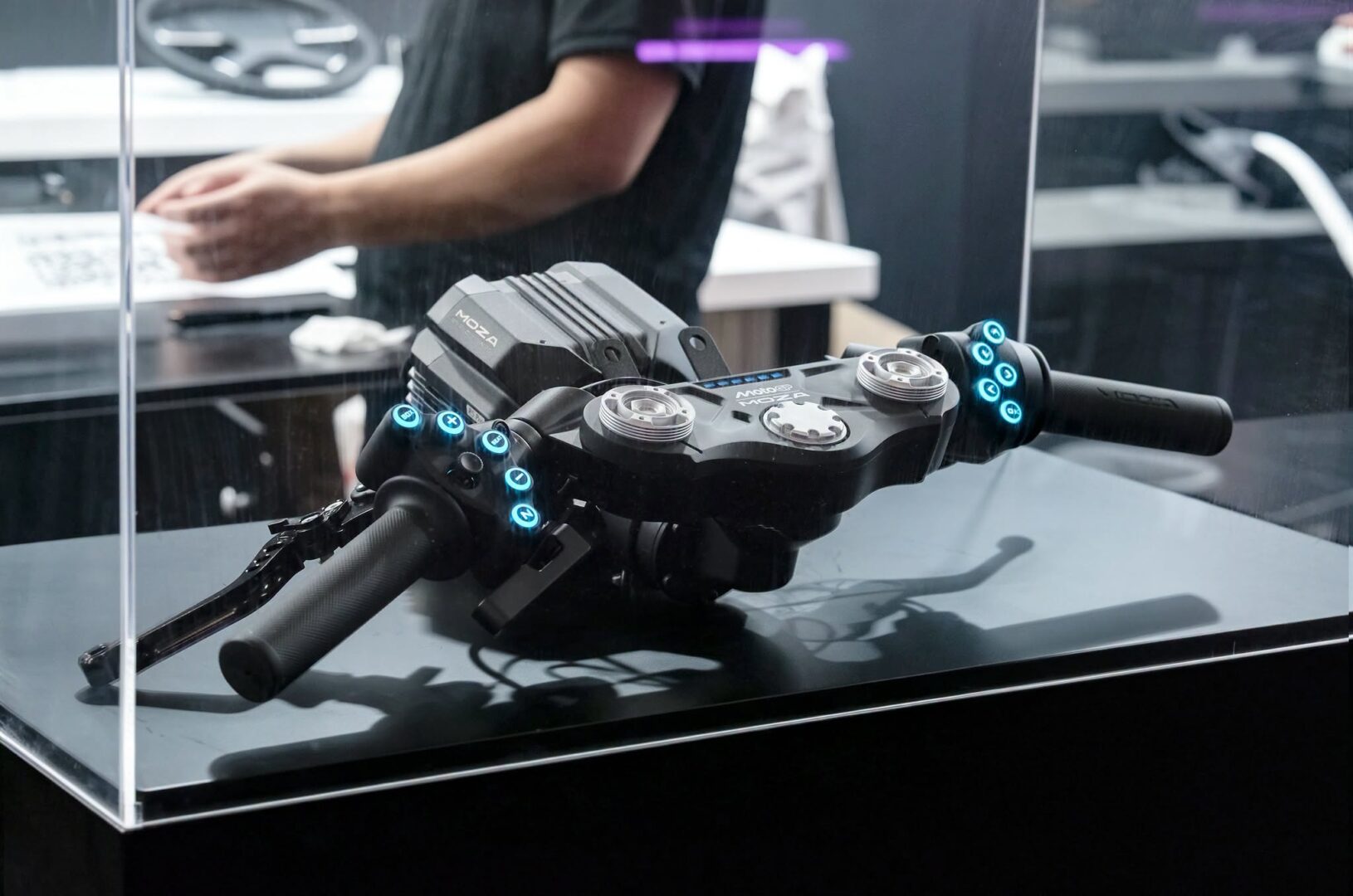
A single Instagram post. No video, just a photo. In less than 24 hours, it had cracked 400,000 views. By the time our YouTube video went up, that number had climbed past 600,000. The MOZA MotoGP handlebar didn’t need a big launch campaign to get sim racers talking. It just needed to exist.
But a photo doesn’t answer questions, and the community had a lot of them. Does it have a rear brake? Is the force feedback real or just marketing language? Does it actually understand counter-steering, or is it a steering wheel wearing a costume? We dug through MOZA Racing’s official specs and pulled together what’s confirmed, what’s still speculation, and where the real debate is happening. Watch the full breakdown in our video below, or read on for the write-up.
Watch: 500,000 People Are Asking About MOZA’s Bike Sim Handlebar… So We Got Answers
Where the MOZA MotoGP Handlebar Fits in the Bike Sim Landscape
Bike sims have been the forgotten corner of sim racing for a while now, and it’s not hard to see why. A steering wheel and pedals can approximate the feel of driving a car. A motorcycle is a different problem: counter-steering, leaning, body weight, centrifugal force. None of that maps cleanly onto existing hardware, which is probably why so few companies have tried.
MOZA Racing first announced this MotoGP partnership a year ago at Gamescom 2026, before showing any hardware. We rounded up that reveal, along with everything else the brand showed off that week, in our Gamescom 2026 sim racing gear roundup.
Trak Racer took a different approach around the same time. It partnered with an existing community bike sim project, RevZ, to build the TRZ, a full standalone motorcycle rig retailing at $2,000. Even that setup has drawn criticism online for missing a proper rear brake and gear shift system, though some hands-on impressions have been positive.
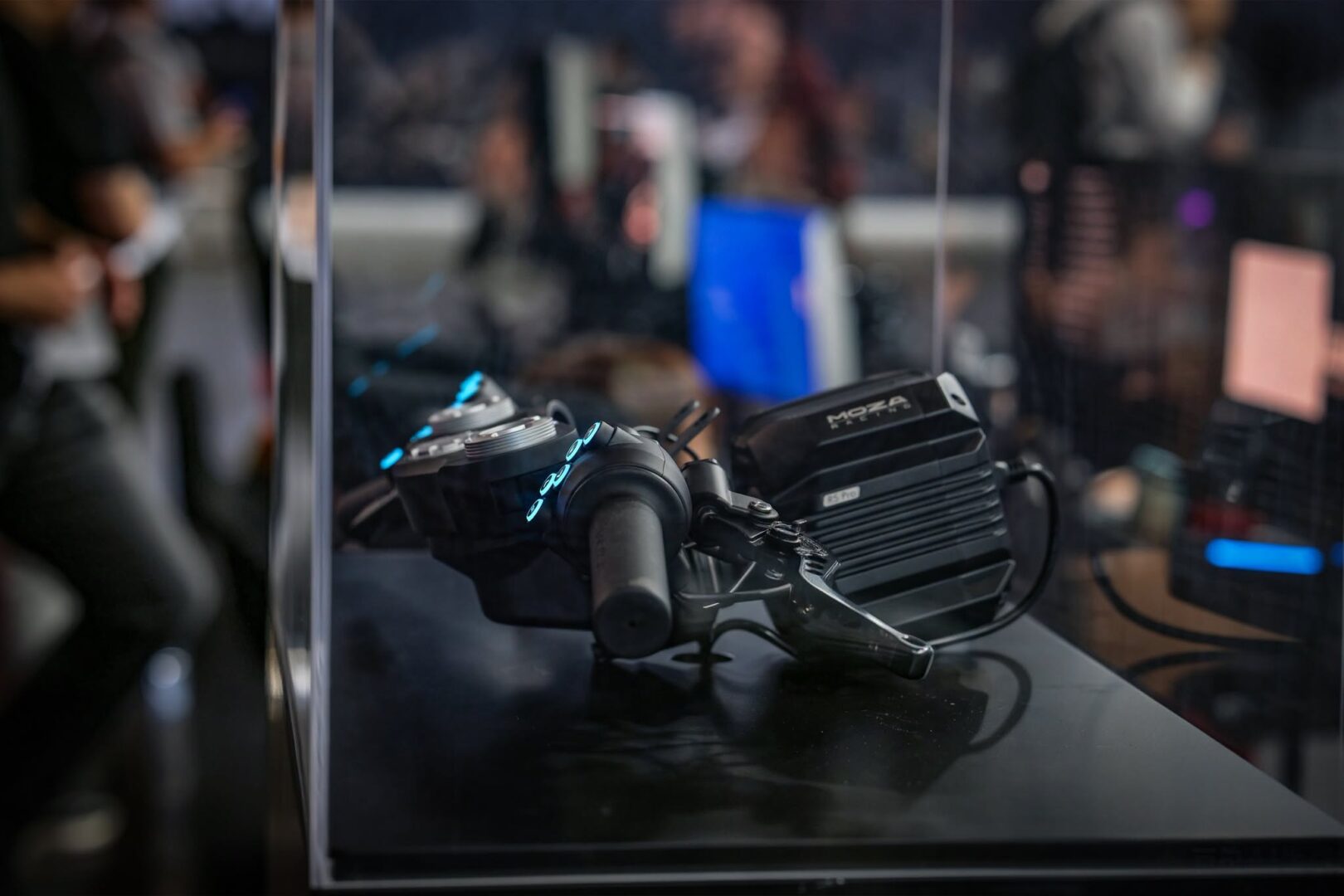
The MOZA MotoGP handlebar takes a narrower approach. Rather than a standalone rig, it’s an accessory that connects to your existing MOZA wheelbase.
MOZA MotoGP Handlebar: Full Spec Breakdown
Here’s everything MOZA Racing has listed so far:
- Width: 620mm
- Rear housing: magnesium alloy
- Front housing: plastic
- Grips: silicone
- Optional display: MOZA CM2 dashboard with a customizable UI and official presets
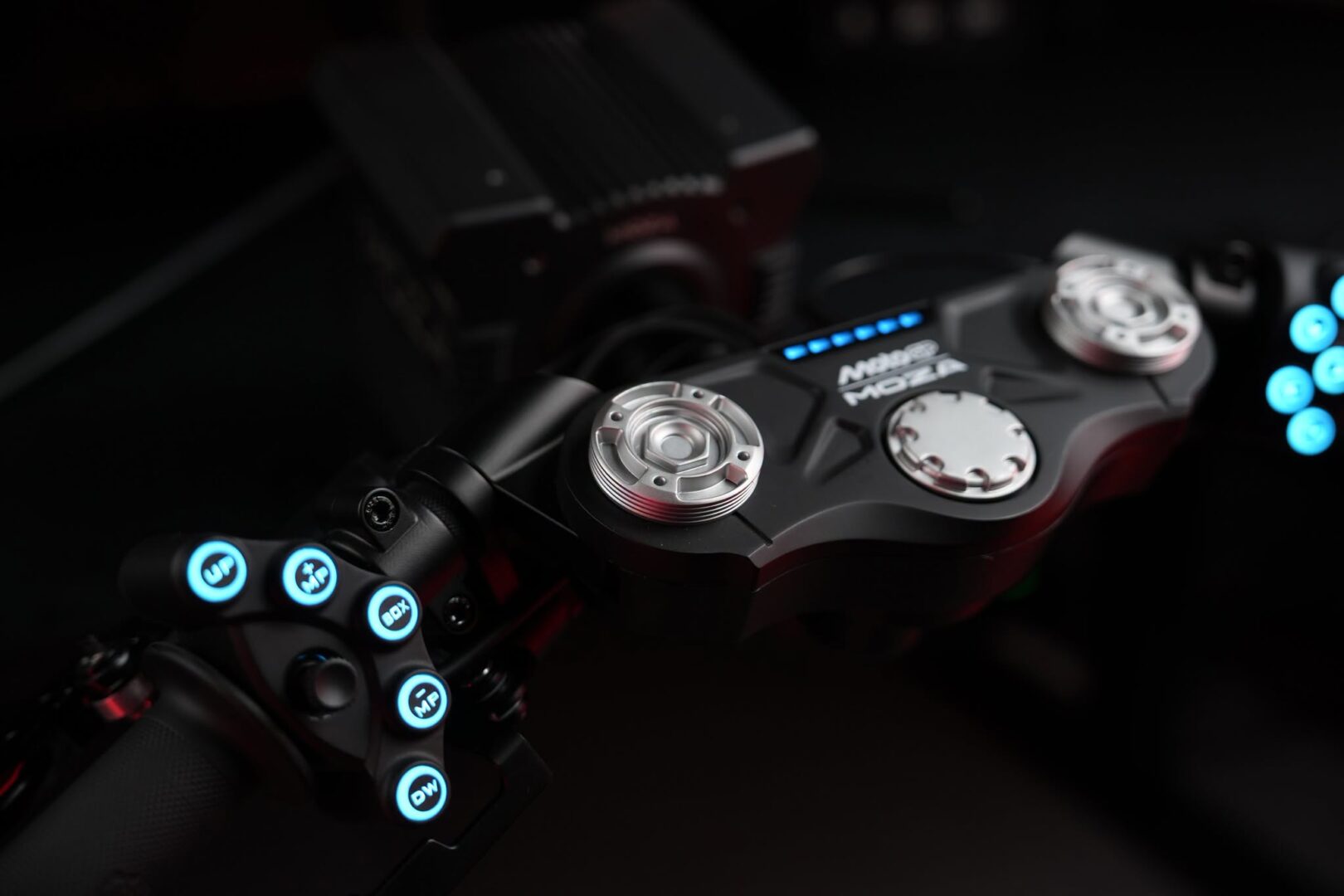
- Controls: 10 backlit short-travel buttons, a D-pad, two five-way switches, and six RGB shift lights, with 16.7 million color options across both
- Connection: custom aluminum alloy quick release, compatible with all current MOZA wheelbases
- Third-party wheelbase support: not supported
- Price: not yet announced. Our estimate: likely just under $500
- Release window: targeted for end of year, though that timeline isn’t guaranteed
Now, to the questions the community actually asked.
Does the MOZA MotoGP Handlebar Have a Rear Brake?
Confirmed: yes. It’s an analog thumb lever mounted below the left bar. That mirrors how real MotoGP bikes handle the rear brake. MOZA isn’t inventing a workaround here, it’s accurate to the real hardware.
What’s still unclear is foot controls. Real motorcycles use a foot-operated rear brake and a foot shifter. Right now, this is a handlebar-only product. Given MOZA’s track record across its car, truck, and flight sim lineups, foot controls seem like a logical next step, though nothing has been confirmed. The bigger open question is what you’d actually mount them to, since a dedicated motorcycle rig chassis doesn’t exist yet in MOZA’s lineup.
Is the Force Feedback Real?
Confirmed: yes. It runs through your existing MOZA wheelbase, so torque output depends entirely on which base you own, anywhere from 3.9Nm up to 25Nm. If you’re curious what that top end actually feels like on the car sim side, we broke it down in our MOZA R25 Ultra review. How that torque translates into an actual riding feel depends heavily on how well each game’s developers implement it.
Confirmed and in-development title support, per MOZA’s site:
- MotoGP 26
- GP Bikes
- Track Day
- Live for Speed
- The Crew Motorfest
- In development: additional MotoGP series titles, the Ride and SBK series, Rims Racing, TT Isle of Man, and Lane Splitter
MX Bikes compatibility has been requested by the community but hasn’t been confirmed either way.
Does It Actually Understand Counter-Steering?
This was, by a wide margin, the most debated question in our comments, and for good reason. Anyone who actually rides has strong opinions about how counter-steering physically works. There’s also a lot of skepticism about whether hardware companies get it right.
MOZA’s answer is two separate riding modes built into the same hardware:
- Direct lean mode, where you control lean angle directly
- Counter-steering mode, which handles the push-to-turn mechanic riders use at speed
No extra parts, just a mode switch. That sounds good on paper, but as with force feedback, nobody will really know until it’s in someone’s hands. We’re planning to push MOZA for a review unit. We’ll report back with hands-on impressions from a rider’s perspective as soon as we can.
Shifting and Foot Controls
Right now, this is a handlebar-only assembly. There are no foot pegs and no leg-operated shifter. MOZA already builds full pedal sets for its car sim lineup, so the technology clearly exists. The open question is what a shifter or foot brake would actually mount to, since there’s no dedicated bike chassis in the lineup yet.
What’s Still Unknown About the MOZA MotoGP Handlebar
- Console compatibility. Everything shown so far points to PC only. Nothing has been said about Xbox or PlayStation support.
- Pricing. Still unannounced.
- Exact release date. MOZA is targeting end of year, but that’s not locked in.
What the Community Is Saying
The comments section turned into a genuinely good debate. A few threads are worth highlighting:
- Several riders pointed to gyroscopic precession as the real physics behind counter-steering. They argued a dedicated counter-steering mode is non-negotiable for any setup to feel legitimate.
- Others pushed back on the criticism entirely, framing this as a clear improvement over a gamepad regardless of whether the implementation is perfect on the first try.
- A few commenters floated their own build ideas: bolt-on bike seat frames for existing rigs, a second wheelbase dedicated to lean angle while the handlebar handles steering, even repurposed bicycle frames.
- There’s a recurring request for MX (motocross) support specifically. Multiple commenters noted more people ride MX than any other motorcycle discipline.
- A handful of longtime DIY bike rig builders shared their own FFB setups running GP Bikes, MX Bikes, Live for Speed, and Assetto Corsa through rumble-to-FFB translation software. It’s a good reminder that hardware like this has been a passion-project workaround for years before now.
The overall sentiment landed closer to cautious optimism than skepticism. Nobody thinks this will replicate riding a real bike, but most people see it as a meaningful step up from a gamepad, provided MOZA nails the software.
Final Thoughts
MOZA hasn’t shipped anything yet. It hasn’t announced a price or confirmed a release date. What it has shown is a level of detail, an analog rear brake, a real torque-driven force feedback system, and a dedicated counter-steering mode, that suggests this isn’t a rushed accessory. Whether the MOZA MotoGP handlebar delivers on that will depend entirely on execution once it’s actually in riders’ hands, and we intend to be among the first to find out.
For the full spec sheet and MOZA Racing’s own product page, check out the MOZA MotoGP handlebar page: https://mozaracing.com/pages/moto-gp
Disclosure: We sell MOZA Racing products through Sim Motion. All opinions are our own.
I don’t care if it is not perfect as I rode super bikes and all other bikes and now I am just and old man, it will be amazing to relive the old days. Well done Moza you will have your critics but I truly applaud you.